Gizmo Raises $22M to Build AI Learning App
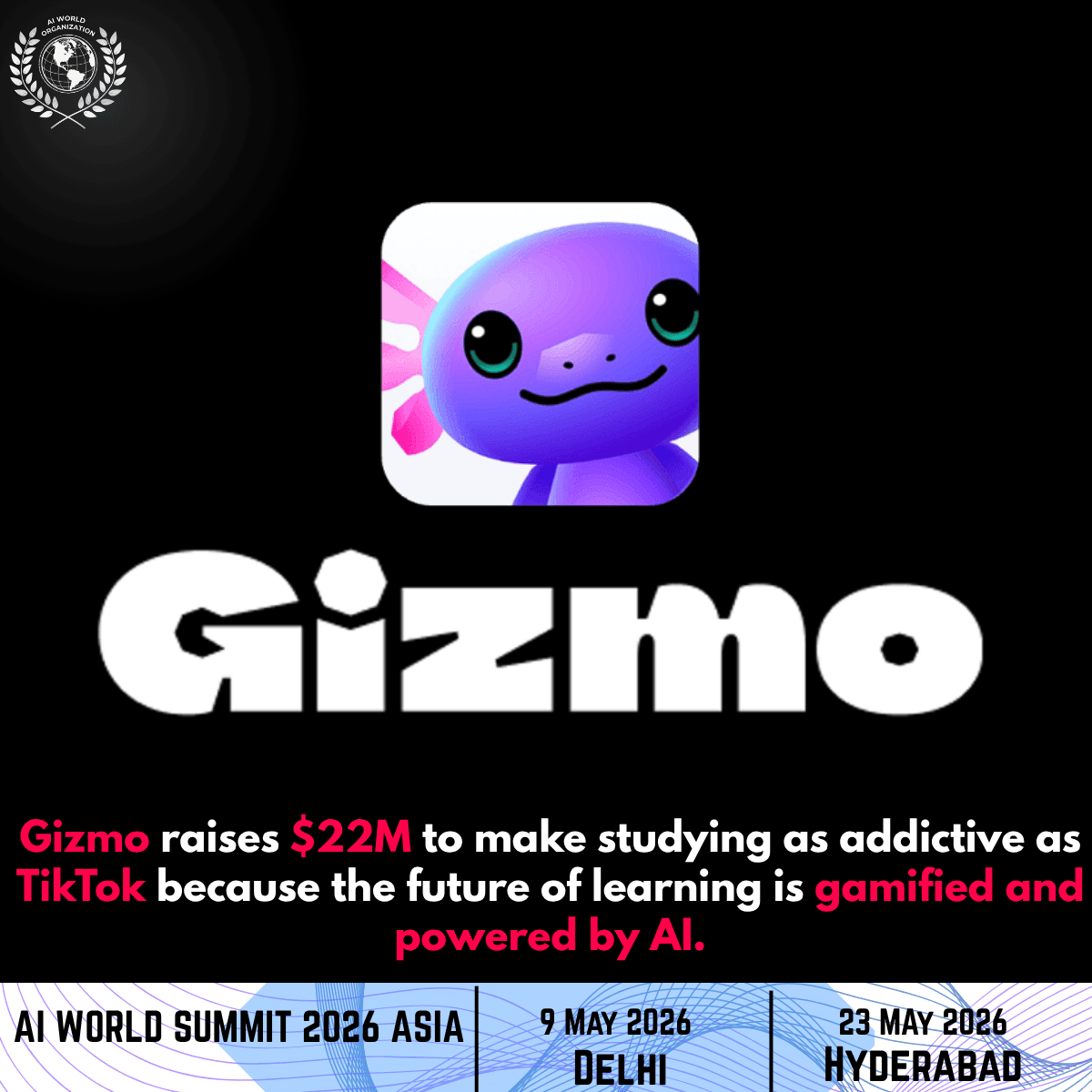
Gizmo secures $22M Series A led by Shine Capital to expand its AI-powered, gamified learning app to 1 billion learners worldwide.
TL;DR
Gizmo, an AI-powered study app founded by three Cambridge graduates, has raised $22M in a Series A round led by Shine Capital. With 13 million users across 120 countries, the app turns studying into a gamified, social experience — think TikTok-style engagement but for your exams. The fresh funding will fuel US expansion and team growth.
Gizmo Raises $22M in Series A to Make Learning as Addictive as TikTok
The edtech landscape is witnessing a significant shift as AI-powered learning platforms continue attracting major investor attention. In one of the more compelling AI funding news stories to emerge this week, Gizmo — a London-founded AI learning app — has successfully closed a $22 million Series A funding round, led by Shine Capital. The round also saw participation from Ada Ventures, Seek Investments, GSV, and NFX, the latter of which had previously led the company's $3.5 million seed round. This latest round of AI funding underscores a growing conviction among venture capitalists that the next frontier of artificial intelligence lies not just in enterprise tools or healthcare, but in fundamentally reimagining how students around the world learn.
Gizmo's rise from a seed-stage idea to a platform boasting 13 million users across 120 countries is a story rooted in a deceptively simple observation — that social media is addictive because it is brilliantly designed, and that education has historically been anything but. With fresh capital now in hand and a rapidly growing user base, the startup is positioning itself to challenge the very notion of what a learning experience should feel like in the age of generative AI.
From Cambridge Dorms to 13 Million Users Worldwide
Gizmo was founded in 2021 by three University of Cambridge graduates — Petros Christodoulou, Robin Jack, and Paul Evangelou. The founding team didn't emerge from corporate boardrooms or storied Silicon Valley garages; instead, they came from classrooms where they experienced firsthand the friction of traditional studying. They knew students were smart enough to learn, but that the tools available to them were no match for the psychological pull of platforms like Instagram, YouTube, and TikTok.
The idea was grounded in real user feedback from the very beginning. Students who tried early versions of Gizmo told Christodoulou that they found themselves able to study for longer periods without getting distracted — something they had previously struggled with when platforms like TikTok were just a swipe away. One piece of feedback, in particular, crystallised the company's entire direction. "Our users started regularly describing Gizmo as a game and telling us they'd never been able to study so much before because they'd usually get distracted and go on TikTok instead, but that this wasn't happening when they used Gizmo. Then we realised that learning is able to be as addictive as social media if it is designed correctly," said Christodoulou.
That insight became the philosophical foundation on which Gizmo was built. Rather than trying to compete with social media by removing students from it, the team decided to borrow what makes social media so compelling — personalisation, instant feedback, social connection, and variable rewards — and funnel that same psychological energy into studying. The results have spoken for themselves. Today, Gizmo has reached 13 million users across 120 countries, and it has done so almost entirely through organic word-of-mouth, without the kind of costly paid marketing campaigns that typically drive edtech growth.
How the Platform Works: AI Meets Gamification
At its core, Gizmo is an AI-powered study tool that removes the most tedious parts of academic preparation while amplifying the parts that actually help students retain information. Users can upload their own notes, academic documents, or even web links directly into the platform. Gizmo's AI then processes that content and automatically generates personalised flashcards, adaptive quizzes, and gamified study challenges tailored to each student's individual learning pace and knowledge gaps.
What separates Gizmo from a standard AI summarisation tool, however, is the layer of social and competitive design wrapped around the learning experience. Students can study together in real time, compete on leaderboards that rank them against their peers, and hold each other accountable through shared progress tracking. The platform introduces streak mechanics similar to those seen in language learning apps like Duolingo, and many Gizmo users have reportedly maintained study streaks of over 100 consecutive days — a metric that speaks to genuinely habitual engagement rather than surface-level curiosity.
This combination of AI personalisation and social gamification creates what the founders describe as "network effects" within the learning environment. The more students who join a subject group or study cohort, the more competitive and socially engaging the experience becomes for everyone involved. In markets already populated by flashcard and tutoring platforms such as Quizlet, Anki, and Brainscape, Gizmo's differentiation is clear: it isn't just trying to be a better study tool — it's trying to be a more fun one, one that students actually look forward to opening rather than dreading. This approach to AI funding deployment, where money goes directly into refining engagement mechanics rather than just adding more AI features, is what has helped the company stand out in an increasingly crowded edtech sector.
$22M Series A: What the AI Funding Will Power
The fresh AI funding of $22 million will be directed toward several strategic priorities that reflect Gizmo's ambition to grow from a global grassroots phenomenon into a dominant force in structured academic markets. The most immediate use of capital will be the expansion of the company's engineering and AI research teams, with new hires planned across its offices in both San Francisco and London. This dual-city presence reflects a deliberate effort to remain anchored in the UK — where the company was born and where much of its early traction was concentrated — while simultaneously building the operational muscle needed to compete in the American market.
The US college market is the most critical target for this phase of growth, and it represents a meaningfully different challenge from the exam-focused academic environments in the UK, Europe, and Asia where Gizmo has historically thrived. American college students have a wider range of course types, less standardised examination formats, and a more fragmented relationship with study tools compared to students preparing for rigorous national exams in other countries. Gizmo will need to adapt its product experience and content infrastructure to meet the specific needs of this audience — a task that will require both technical investment and on-the-ground market understanding.
For the investors backing this round, the appeal of Gizmo extends beyond the current product. Shine Capital, which led the Series A, along with the continued involvement of NFX — which has backed the company since its earliest days — signals a belief that Gizmo is building something with the potential to become a foundational platform in global education. When venture firms stay committed across multiple funding stages, it typically reflects high conviction in both the team's execution ability and the size of the market opportunity. This AI funding news is not just a milestone for Gizmo; it is a signal to the broader edtech ecosystem that AI-driven, gamified learning is a space that serious investors are watching closely.
The Bigger Vision: One Billion Learners and Beyond
Gizmo's long-term ambition is nothing short of transformational. The company has stated clearly that it wants to reach one billion learners and make education as engaging and emotionally rewarding as the most popular entertainment platforms on the planet. That goal might sound aspirational to the point of being abstract, but when you look at the trajectory — from zero to 13 million users in just a few years, driven almost entirely by word of mouth — it becomes harder to dismiss.
The broader context for this AI funding news is worth understanding. We are living through a period in which artificial intelligence is being applied to virtually every domain of human activity, and education is no exception. Platforms are racing to use large language models, adaptive learning algorithms, and behavioural psychology to redesign the learning experience from the ground up. What makes Gizmo stand out in this crowded race is not necessarily the sophistication of its underlying AI — though that is clearly a core competency — but the emphasis it places on human behaviour, social dynamics, and emotional engagement as the primary levers for driving learning outcomes.
There is also something quietly significant about the fact that this company was built in London by Cambridge graduates and has grown most powerfully in markets outside the United States. It challenges a prevailing narrative in the tech industry that meaningful consumer product innovation must originate from Silicon Valley. As Gizmo prepares to take its US expansion seriously, it carries with it a product culture shaped by students from around the world — and that diversity of perspective may turn out to be one of its most durable competitive advantages. For The AI World Organisation, this story represents exactly the kind of AI funding news worth tracking: a genuine use case where artificial intelligence is solving a real human problem, not just optimising an existing process.