Didit Raises $6M for AI Identity Verification
Didit secures $6M seed funding from Y Combinator and others to build AI-native identity infrastructure fighting deepfake fraud globally.
TL;DR
Didit, a Y Combinator-backed startup, has raised $6 million in seed funding to build identity verification infrastructure designed for the AI era. The platform helps businesses fight deepfake fraud and synthetic identity theft through its developer-friendly API that analyzes over 200 signals per verification. With 1,500+ customers across 220 countries, Didit aims to create a universal internet passport for seamless identity verification.
Didit Secures $6 Million in Seed Funding to Revolutionize AI-Native Identity Verification Infrastructure
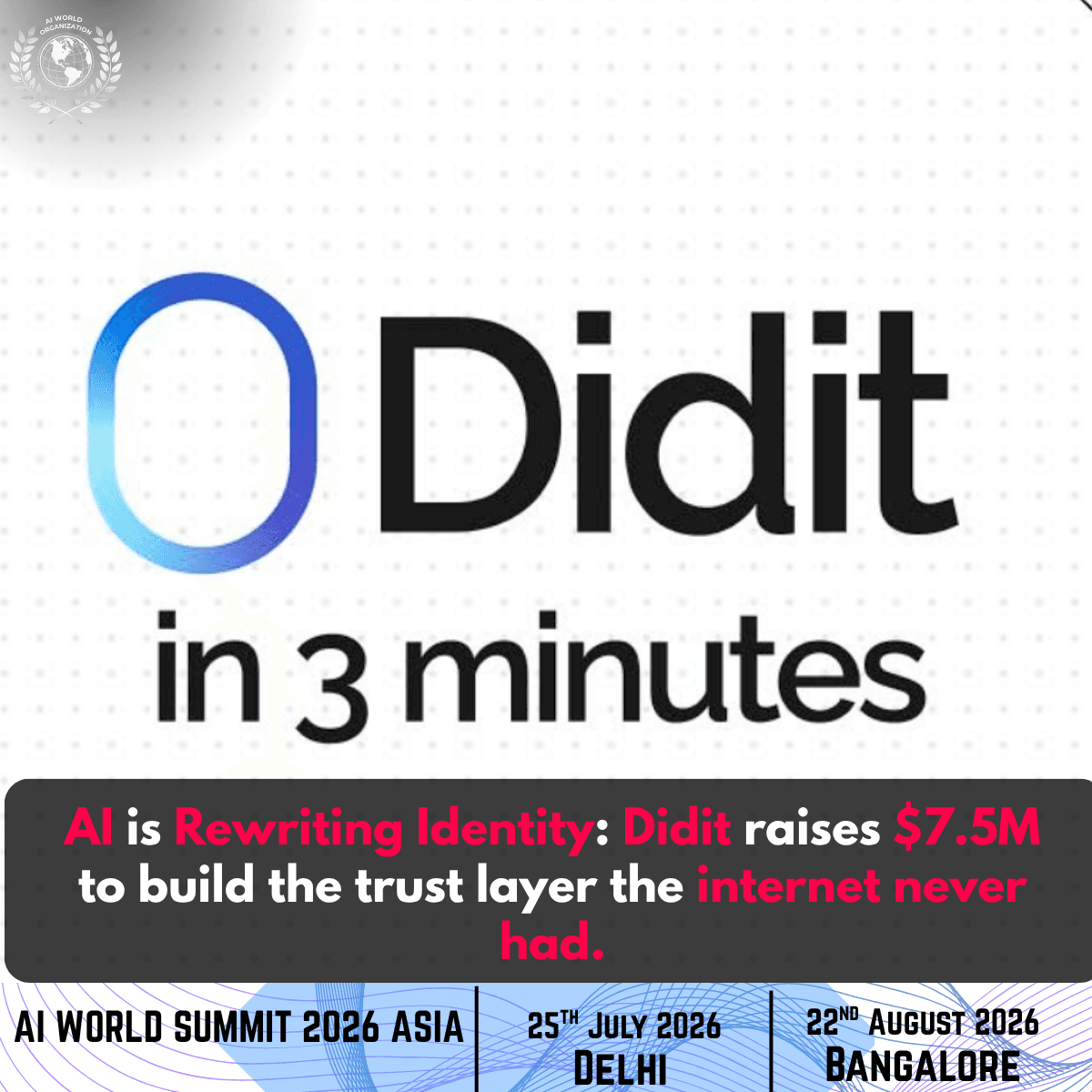
The landscape of digital identity verification is undergoing a massive transformation as artificial intelligence continues to reshape how we interact online. Didit, an emerging player in the identity and fraud prevention space, has successfully closed a $6 million seed funding round, bringing the company's total capital raised to $7.5 million. This significant investment marks a pivotal moment for the startup as it works to build what could become the internet's most comprehensive programmable identity infrastructure designed specifically for the age of artificial intelligence.
The funding round attracted an impressive lineup of investors, including Y Combinator, Pioneer Fund, Orange Collective, Founders Future, Phosphor Capital, SaaSholic, and Rebel Fund. The round also saw participation from notable angel investors such as Tomer London, co-founder of Gusto, and Taro Fukuyama, founder of Fond Technologies. This diverse investor base reflects growing confidence in Didit's vision to create a developer-first approach to identity verification that can handle both human users and AI agents at a global scale.
The Rising Challenge of AI-Powered Fraud and Identity Theft
The timing of Didit's fundraise couldn't be more critical. As generative AI technologies become increasingly sophisticated, they're simultaneously enabling unprecedented levels of fraud and identity manipulation. Recent industry data shows that deepfake fraud surged by 700 percent in the first quarter of 2025 compared to the same period the previous year, while synthetic identity document fraud jumped by a staggering 378 percent. These alarming statistics underscore the urgent need for next-generation identity verification solutions that can keep pace with rapidly evolving threats.
Traditional identity verification systems were built for a world where humans were the primary actors online. However, the emergence of generative AI has fundamentally changed this paradigm. Fraudsters can now create convincing deepfakes, clone voices with just seconds of audio samples, and generate synthetic identities that bypass conventional Know Your Customer standards with alarming ease. The old playbook for detecting fraud based on visual quality or linguistic errors is no longer sufficient when AI can produce nearly flawless forgeries in seconds.
What makes the current threat landscape particularly dangerous is not just the quality of individual fake documents or videos, but the ability of bad actors to create comprehensive identity packages that satisfy every layer of traditional verification funnels. By combining high-fidelity government IDs with deepfake video feeds that match license photos, attackers can simulate consistent digital personas that fool even sophisticated verification systems. This evolution from isolated fraud attempts to coordinated, AI-powered identity packages represents a fundamental shift that existing infrastructure was never designed to handle.
Building Programmable Identity for a New Digital Era
Didit's founders, twin brothers Alberto and Alejandro Rosas, recognized these emerging challenges early on. Both AI engineers by background, they established Didit in 2023 with a clear vision of what identity verification would need to become as AI agents and generative technologies became ubiquitous across the internet. Their thesis was straightforward but ambitious: no existing provider was building for the reality that was actually unfolding in the market.
According to Alberto Rosas, who serves as the company's Chief Executive Officer, the problem was multifaceted. Fraud was getting smarter and more sophisticated by the day. Regulators were implementing stricter compliance requirements that accounted for AI agent activity. Millions of new businesses suddenly needed robust user verification capabilities. Yet every existing provider in the market struggled to catch novel forms of AI-generated fraud, offered painful onboarding experiences, and hid their pricing structures behind sales calls rather than providing transparent developer-focused solutions.
Didit's approach centers on creating what the founders call programmable identity infrastructure through a comprehensive application programming interface. This developer-first methodology allows businesses to integrate sophisticated identity verification, fraud detection, and user onboarding capabilities directly into their applications from the ground up. The company positions itself as offering one unified API for identity, fraud prevention, and onboarding with upfront transparent pricing.
The technical infrastructure Didit has built is remarkably comprehensive. The platform connects to global government data sources and analyzes more than 200 distinct signals across each verification request. This includes document authenticity checks, biometric liveness detection, injection attack identification, deepfake analysis, and behavioral pattern recognition. By examining this wide array of signals simultaneously, the system can build a more complete picture of whether an identity verification attempt is legitimate or fraudulent.
Proprietary AI Models and Global Optimization
One of Didit's key differentiators is its commitment to building proprietary AI models in-house rather than relying on third-party dependencies. This strategic decision gives the company greater control over its technology stack and allows it to rapidly iterate and adapt as new fraud techniques emerge. In a landscape where threat actors are constantly evolving their methods, the ability to quickly update detection algorithms without waiting for external vendors provides a significant competitive advantage.
The company has also invested heavily in creating specialized verification flows optimized for every country it serves. These country-specific flows account for critical variables such as different face types, varying skin tones, diverse document formats, and different lighting conditions that exist across global markets. This attention to localization is crucial because AI models trained primarily on homogeneous datasets can exhibit problematic biases that lead to higher false positive rates for certain demographic groups.
By carefully curating training data and optimizing verification flows for regional variations, Didit aims to reduce instances where legitimate users are incorrectly flagged as fraudsters simply because they don't match the default profiles the AI models were trained on. This ethical consideration becomes particularly important when identity verification, regulatory compliance, and fair access to services are all at stake.
Despite extensive automation and AI-powered analysis, Didit maintains that human oversight remains essential for certain edge cases. When the system flags potential red flags, human agents still review these cases to make final determinations. This hybrid approach combines the speed and scale of AI analysis with the nuanced judgment that human reviewers can provide in ambiguous situations.
Long-Term Vision: An Internet Passport for Humans and AI Agents
While Didit's current focus is on providing best-in-class identity verification APIs for businesses, the company's long-term vision extends far beyond traditional verification workflows. The ultimate goal is to create an identity wallet system that would allow individuals to verify themselves once and then reuse that verified identity everywhere they go online.
In this envisioned future, developers would integrate identity verification with a single API call, or in the case of AI agents, a single Model Context Protocol tool call. End users would experience identity verification as a simple one-click process across any e-commerce platform, government website, or business service they access. Essentially, Didit aims to create what Alberto Rosas describes as an internet passport that would work seamlessly across the entire digital ecosystem for both human and AI identities.
This vision draws clear parallels to how companies like Stripe revolutionized online payments and Twilio transformed communications by making these capabilities programmable through simple APIs. Didit wants to do for identity what these pioneers did for their respective domains: make it accessible, programmable, and seamless for developers to implement.
Impressive Growth and Market Traction
The company's growth trajectory since its founding demonstrates significant market demand for its approach. Didit has already attracted more than 1,500 business-to-business customers across diverse sectors including fintech, cryptocurrency, online marketplaces, digital gaming, mobility services, and government applications. This breadth of customer types validates that the identity verification challenges Didit addresses cut across industry boundaries.
Perhaps even more impressive is the company's global reach. Didit currently serves customers in more than 220 countries and territories, bringing identity verification capabilities to numerous businesses that previously lacked access to such services. This extensive geographic coverage reflects both the universal nature of identity verification needs and Didit's success in building infrastructure that can handle the complexities of global operations from day one.
The company has also achieved profitability, a rare accomplishment for an early-stage startup that's simultaneously experiencing rapid growth and raising venture capital. This financial discipline suggests strong unit economics and a business model that can scale sustainably without requiring continuous capital infusions just to maintain operations.
Strategic Use of Funding for Global Expansion
With the fresh $6 million in seed capital, Didit plans to accelerate several key strategic initiatives. The funding will support global go-to-market expansion as the company seeks to capture market share in new geographic regions and industry verticals. Product development will also receive significant investment as Didit continues enhancing its platform capabilities and building toward its long-term identity wallet vision.
The company also plans to expand its team across product development, sales, and customer success functions. As a rapidly growing platform serving thousands of customers across hundreds of countries, having the right people in place to support customers and drive product innovation becomes increasingly critical.
The participation of Y Combinator in this funding round is particularly noteworthy. Didit was part of Y Combinator's Winter 2026 batch, and the accelerator's continued investment in this seed round signals strong conviction in the team and opportunity. Y Combinator has a track record of identifying and supporting companies that go on to define new product categories, and its backing provides both capital and validation that can help Didit attract additional customers and talent.
Addressing Critical Market Needs at the Intersection of AI and Security
The broader context surrounding Didit's fundraise reveals why investors are paying close attention to this space. Global age verification mandates are accelerating, creating new compliance requirements for platforms. Financial regulations are being updated to account for AI agent activity. The proliferation of AI agents capable of taking autonomous actions online means that identity verification can no longer assume all entities are human.
At the same time, the fraud landscape has evolved from opportunistic individual attacks to industrialized operations powered by AI. Threat actors with relatively limited technical skills can now execute sophisticated fraud schemes that would have previously required extensive expertise and resources. Tools that can generate fake government IDs optimized to bypass automated verification systems are readily available, lowering the barrier to entry for would-be fraudsters.
This confluence of factors creates an urgent need for identity infrastructure that can operate at internet scale, detect novel AI-generated fraud, provide seamless user experiences, and adapt quickly as new threats emerge. Didit's developer-focused API approach, proprietary AI models, and global optimization position it well to address these interconnected challenges.
The company's emphasis on transparency also resonates with developer communities that have grown frustrated with legacy identity verification providers. By offering clear pricing and comprehensive documentation upfront rather than requiring lengthy sales processes, Didit lowers the friction for businesses to evaluate and implement identity verification. This approach aligns with broader trends in developer tools toward self-service adoption and consumption-based pricing models.
Looking ahead, the competitive landscape for AI-native identity verification will likely intensify as more players recognize the market opportunity. However, Didit's early mover advantage in purpose-building for an AI-first world, combined with its impressive customer traction and global coverage, provides a strong foundation for continued growth. The company's vision of becoming the trust layer for the internet is ambitious, but the fundamental need it addresses only becomes more critical as AI capabilities advance and digital interactions become increasingly difficult to authenticate.
For businesses navigating the complex challenges of user verification in an AI-saturated environment, solutions like Didit represent a new generation of infrastructure purpose-built for current and emerging threats. As generative AI continues reshaping digital landscapes, the identity verification systems we rely on must evolve in parallel. Didit's recent funding success suggests that investors believe the company is well-positioned to lead this evolution and define what programmable identity infrastructure looks like for the next era of the internet.


