River Mobility Raises $120 Million in Series C: What This Means for India’s EV Two-Wheeler Market
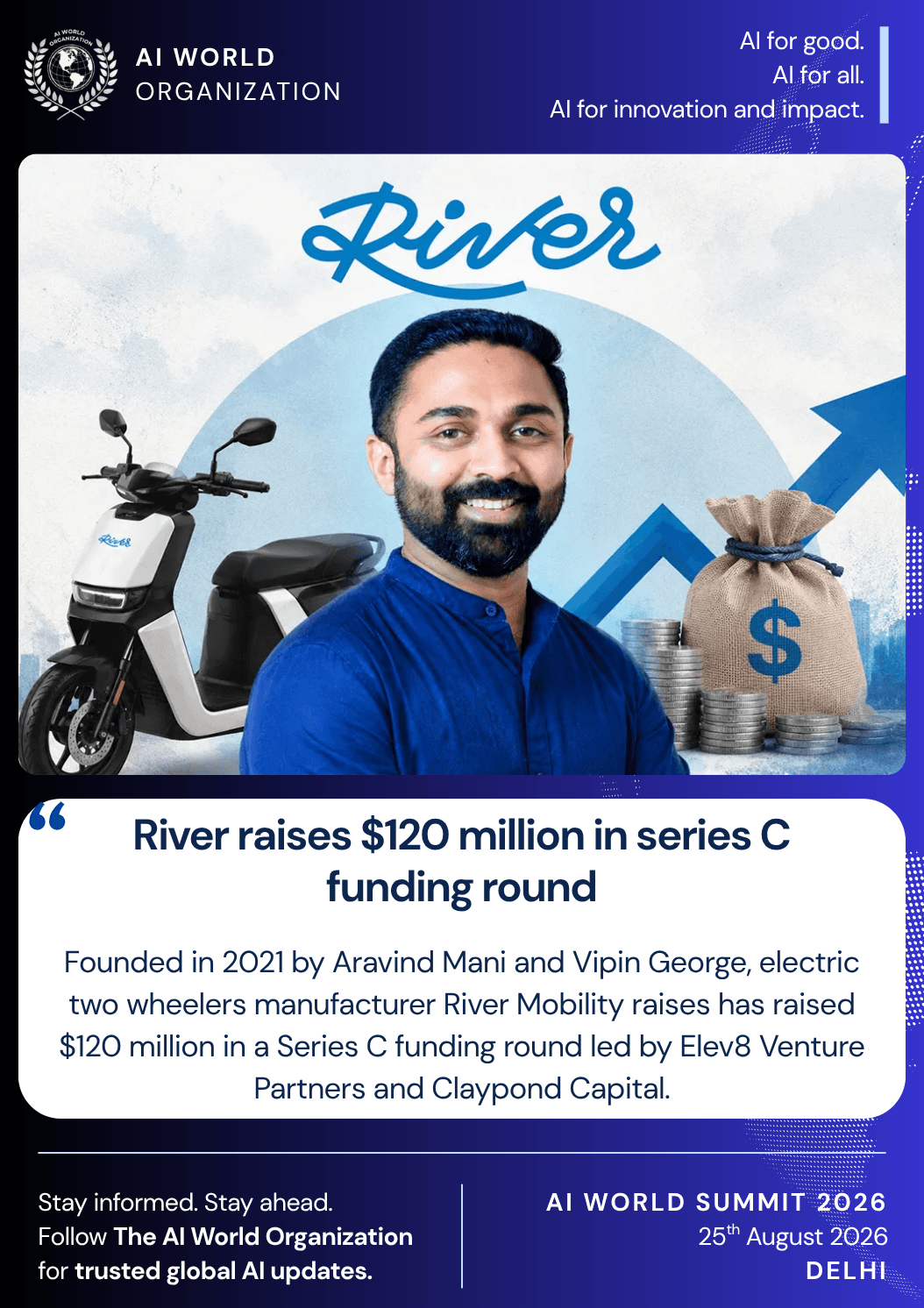
Bengaluru-based electric two-wheeler maker River Mobility has raised $120 million (about ₹1,141 crore) in a Series C funding round comprising both equity and venture debt, marking one of the largest private investments in India’s electric two-wheeler segment this year. The equity portion was led by Elev8 Venture Partners and Claypond Capital, with participation from Singularity AMC, Anicut Capital, 360 ONE Asset, JIF Capital, and HDFC AMC, while existing investors including Yamaha Motor Corporation, Al Futtaim Group, and Mitsui & Co. also joined the round. The venture debt component saw participation from Alteria Capital, Innoven Capital, and Stride Ventures.
Introduction
The funding comes at a time when India’s electric two-wheeler market is gaining momentum, driven by rising fuel costs, stronger policy support, and growing consumer acceptance of EVs. River Mobility, which currently holds around 3% market share in the electric two-wheeler segment, plans to use the fresh capital to expand manufacturing capacity, set up a new greenfield plant, launch new products in the utility-lifestyle segment, and improve gross margins and EBITDA profitability. According to co-founder and CEO Aravind Mani, about 40% of the funds will go into R&D as the company prepares to scale production and deepen its premium positioning.
This round is also notable for marking River’s first significant backing from Indian institutional investors, adding to an already strong global investor base that includes names like Toyota Ventures, Lowercarbon Capital, Maniv Mobility, and Marubeni Ventures. The deal signals growing confidence in River’s design-led approach, manufacturing readiness, and long-term product roadmap in a category that has seen both rapid growth and intense competition.
Company Overview
Founded in March 2021 by Aravind Mani and Vipin George, River Mobility entered the market with a focus on design, technology, and utility value rather than just price. Its first product, the River Indie electric scooter, launched in 2023 and targeted urban commuters looking for a premium, well-designed alternative to mass-market options. The company has since positioned itself as a design-first EV brand that competes on quality, performance, and user experience instead of engaging in a race to the bottom on price.
River’s current manufacturing facility in Hoskote, near Bengaluru, has a capacity of about 10,000 vehicles per month, and the company plans to increase that by five to eight times with its new greenfield plant. This expansion is critical as River aims to scale production, reduce unit costs, and support a broader product portfolio in the utility and lifestyle segments.
Funding Details
The $120 million Series C round is structured as a mix of equity and venture debt, with more than 85–90% in equity and the remainder in debt, according to company statements and media reports. The equity tranche was co-led by Elev8 Venture Partners and Claypond Capital, with Elev8 contributing around $25 million on its own. Participation from Singularity AMC, Anicut Capital, 360 ONE Asset, JIF Capital, and HDFC AMC adds depth to the investor syndicate and brings in fresh domestic capital alongside River’s existing global backers.
On the debt side, Alteria Capital, Innoven Capital, and Stride Ventures provided venture debt to support capex and working capital needs linked to manufacturing expansion and product development. Existing investors such as Yamaha Motor Corporation, Al Futtaim Group, and Mitsui & Co. also participated, reinforcing their continued confidence in River’s strategy and execution.
Use of Funds
River Mobility has outlined a clear plan for deploying the fresh capital:
- Expand capacity at its existing Hoskote plant to meet rising demand.
- Set up a new greenfield manufacturing facility to multiply monthly production capacity by five to eight times.
- Introduce new products in the utility-lifestyle segment, broadening its portfolio beyond the current scooter lineup.
- Invest around 40% of the funds into R&D to strengthen product development, battery technology, and software integration.
- Improve gross margins and move closer to EBITDA profitability as scale increases and unit economics improve.
This allocation shows that River is not just chasing growth, but also focusing on operational efficiency, product depth, and long-term profitability — key factors for surviving in a capital-intensive segment like electric two-wheelers.
Strategic Importance
The funding is strategically important for several reasons. First, it gives River the capital firepower needed to expand manufacturing and compete with better-funded rivals in a segment that is seeing aggressive consolidation. Second, the participation of Indian institutional investors like Elev8, Claypond, and domestic AMCs reduces reliance on foreign capital and strengthens River’s local investor base.
Third, continued backing from global strategic investors such as Yamaha, Toyota Ventures, and Mitsui adds credibility to River’s technology, design, and supply chain capabilities. Yamaha’s involvement, in particular, is significant because it followed a detailed audit of River’s design, R&D, manufacturing processes, and supplier base, after which Yamaha chose to deepen its relationship with the startup.
Market Context
India’s electric two-wheeler market has become one of the most competitive EV segments in the country, with players ranging from Ola Electric, TVS, Bajaj, and Ather to newer startups fighting for share. While overall EV adoption is rising, the segment has also seen price wars, margin pressure, and consolidation, making it harder for smaller brands to survive without strong differentiation and sufficient funding.
In this context, River’s decision to focus on the premium utility-lifestyle segment rather than the mass market is a deliberate bet on brand, design, and customer experience. The company currently holds around 3% market share, and with the new funding, it aims to increase annual sales significantly while improving unit economics and brand perception.
What This Means for the EV Ecosystem
River’s funding send a positive signal to the broader EV ecosystem. It shows that investors are still willing to back well-differentiated, execution-focused EV startups despite market noise and consolidation. It also highlights the importance of strategic investors like Yamaha and Toyota, who bring not just capital but also engineering, supply chain, and manufacturing expertise.
consumers, the expansion could mean more product options, better availability, and improved after-sales support as River scales up. For the industry, it reinforces the idea that design-led, premium positioning can coexist with mass-market players, as long as the brand has enough capital, technology, and operational discipline to execute.
Conclusion
River Mobility’s $120 million Series C round is more than just another funding announcement. It is a statement of confidence in a design-first, India-built EV brand that is trying to carve out a sustainable niche in a crowded market. With strong backing from both global and Indian investors, a clear plan for manufacturing expansion, and a significant commitment to R&D, River is positioning itself for the next phase of growth.
The real test will be execution: whether River can scale production, launch compelling new products, and improve margins fast enough to turn its current 3% market share into a more durable position. If it succeeds, River could become one of the standout success stories in India’s electric two-wheeler journey — not just as a funded startup, but as a brand that redefined what an Indian EV company can look like.


