Rainbow Crops Raises €9.7M for AI Crop Gene Editing
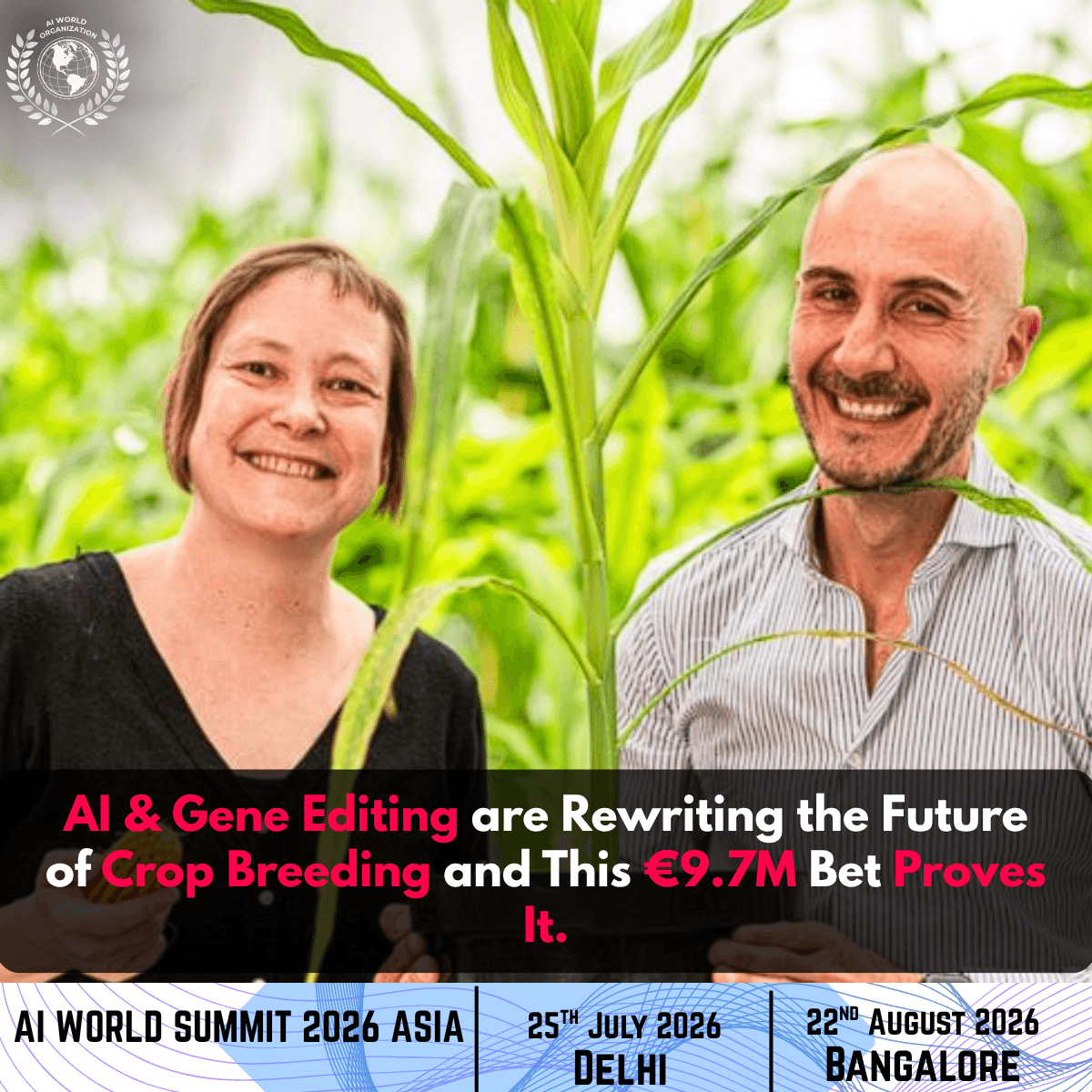
Belgian AgTech startup Rainbow Crops has secured €9.7M in seed funding to advance its AI-powered Trait Foundry™ platform for next-gen crop gene editing.
TL;DR
Ghent-based startup Rainbow Crops has raised €9.7M in seed funding to fast-track its AI-driven crop gene editing platform, Trait Foundry™. Backed by LIFTT, Corteva, and the Gates Foundation, the company is using AI and multiplex genome editing to build climate-resilient, high-yield crop varieties — far faster than traditional breeding ever could.
Rainbow Crops Secures €9.7 Million to Reshape Crop Breeding with AI and Gene Editing
There is a quiet but consequential revolution unfolding at the intersection of artificial intelligence and agricultural science, and it is being led not from Silicon Valley or a sprawling research campus, but from the vibrant university city of Ghent in Belgium. Rainbow Crops, an AgTech startup born out of world-class plant science research, has announced the successful closure of a €9.7 million seed funding round — a milestone that not only validates its bold technological approach but also sends a clear signal to the global agricultural industry that the way we breed crops is on the verge of a fundamental transformation. At The AI World, we see this development as yet another compelling example of how artificial intelligence is reaching beyond the digital realm and embedding itself into the very fabric of our food systems, our environment, and our collective future.
The oversubscribed funding round was led by Italian venture capital firm LIFTT, alongside its dedicated vehicle LIFTT EuroInvest. The round also attracted a strong consortium of investors, including returning backers Agri Investment Fund (AIF), PINC, and VIB, as well as notable new entrants in the form of Corteva — participating through its strategic innovation arm, the Corteva Catalyst™ investment platform — and Maia Ventures. The fact that this round was oversubscribed speaks volumes. It tells us that the appetite for serious, science-backed agricultural technology is growing rapidly among investors who understand the scale of the challenge the world faces in feeding a population projected to reach nearly ten billion people by mid-century, under increasingly unpredictable climatic conditions.
What makes this funding round even more remarkable is the broader financial picture surrounding Rainbow Crops. Just prior to this seed raise, the company had already secured a €6 million grant from the Bill & Melinda Gates Foundation — a globally renowned philanthropic institution known for betting on transformative solutions to some of humanity's most pressing problems. That grant, combined with the freshly closed €9.7 million seed round, means Rainbow Crops is now backed by both the philanthropic sector and the investment community, a convergence that underscores just how seriously the broader world is beginning to take AI-powered crop innovation as a lever for global food security.
The Problem With Traditional Crop Breeding — And Why AI Changes Everything
To truly appreciate what Rainbow Crops is building, it helps to understand the limitations of conventional crop breeding and why they matter so much in the current global context. For decades, traditional breeding programmes have delivered impressive gains in crop yields, pest resistance, and environmental adaptability. But these advances have typically been achieved by targeting relatively simple genetic traits — those controlled by one or a handful of genes — and the process has been painstakingly slow, resource-intensive, and often unpredictable in its outcomes. When scientists and breeders attempt to engineer what are known as complex agronomic traits — characteristics like overall yield potential, tolerance to drought, resilience under extreme heat, or resistance to a combination of soil stresses — the complexity multiplies exponentially. These traits are governed by the interaction of dozens or even hundreds of genes, and identifying the right genetic combinations, testing them, and validating them in real-world field conditions has traditionally taken years, sometimes decades.
The world, however, does not have that kind of time. Climate volatility is accelerating. Extreme weather events that were once considered once-in-a-generation occurrences are now becoming routine, and crop failures in key agricultural regions are having cascading effects on food prices, supply chains, and food security in vulnerable nations. Simultaneously, input costs for farmers — fertilisers, pesticides, water — are fluctuating wildly, driven by geopolitical tensions and shifting energy markets. There is also a meaningful regulatory shift underway, particularly in the European Union and several other jurisdictions, where new gene editing techniques that do not introduce foreign DNA into plant genomes are being progressively differentiated from older GMO regulations and welcomed with more permissive frameworks. All of these forces are converging to create a moment of urgency and opportunity, and Rainbow Crops is positioning itself squarely at that intersection.
Trait Foundry™: The Platform That Brings AI, Genome Editing, and Phenotyping Together
The centrepiece of Rainbow Crops' technological offering is a proprietary platform it calls Trait Foundry™. This platform represents a genuinely novel integration of several cutting-edge disciplines that, when combined, dramatically compress the time and cost required to develop high-performing crop varieties with complex trait profiles. At its core, the Trait Foundry™ platform brings together artificial intelligence and machine learning, multiplex genome editing, precision breeding methodologies, and automated phenotyping into a single, cohesive workflow.
The role of AI within this platform deserves particular attention, because it is not a superficial addition or a marketing embellishment. The AI layer within Trait Foundry™ is responsible for systematically identifying and predicting which combinations of genetic variants are most likely to give rise to the complex agronomic traits that breeders and seed companies are targeting. Given the almost inconceivable number of possible genetic combinations that need to be evaluated when working with multi-gene traits, the computational power and pattern-recognition capabilities of modern AI models are not just useful — they are essential. Without AI, the exploration of this genetic search space would be practically impossible at any commercially meaningful scale or speed.
Multiplex genome editing, the second pillar of the Trait Foundry™ platform, allows Rainbow Crops to make multiple targeted genetic modifications simultaneously, rather than introducing changes one gene at a time. This is a capability that has only become practically feasible with the maturation of tools like CRISPR-Cas systems, and it is what enables the company to generate diverse populations of plants with what it describes as rationally designed genetic diversity. Rather than introducing random mutations and hoping for the best — which is essentially what conventional breeding relies on — Rainbow Crops is creating plant populations in which the genetic variation is deliberate, structured, and guided by the AI's predictions about which architectures are most likely to yield the desired performance outcomes.
Automated phenotyping, the third major element of the platform, addresses one of the most persistent bottlenecks in plant science: the observation and measurement of plant characteristics at scale. Phenotyping — assessing how a plant actually grows, looks, and performs in response to its environment — has traditionally been a labour-intensive, time-consuming process conducted by teams of researchers working in fields or greenhouses. Automated phenotyping systems use sensors, imaging technologies, and data analytics to collect and process vast quantities of performance data across large plant populations, quickly and with far greater consistency than human observation allows. By integrating this capability directly into the Trait Foundry™ workflow, Rainbow Crops dramatically accelerates the feedback loop between genetic design and phenotypic validation, making the entire development cycle faster and more data-driven.
The proof of concept for this integrated approach has already been established in corn, one of the world's most commercially important and scientifically complex crop species. The ability to demonstrate results in corn — a crop where even incremental yield improvements translate into enormous commercial and humanitarian value — is a significant technical credibility marker for Rainbow Crops and its platform.
Leadership Vision and Strategic Direction Post-Funding
Rainbow Crops was founded in 2025 as a spin-off from the VIB–UGent Centre for Plant Systems Biology, one of Europe's most distinguished centres for plant science research. The Centre's deep expertise in understanding how plants function at the molecular and systems level provided the scientific foundation upon which the company's technology was built, and the institutional relationship with VIB — which is also an investor in the company — continues to provide Rainbow Crops with access to world-class research infrastructure and expertise.
At the helm of the company is CEO and co-founder Giacomo Bastianelli, who has articulated a vision that goes well beyond simply improving crop varieties. Bastianelli has described the fresh funding as enabling the company to accelerate its transition from early validation to the systematic deployment of its platform — a phrase that encapsulates the company's ambition to move from proof-of-concept work into real-world, scalable operations. His stated goal is to make complex trait engineering accessible to breeding and seed partners on a global basis, which implies a platform business model in which Rainbow Crops functions as an enabling technology layer for the broader agricultural industry rather than simply as a traditional seed company.
This positioning is strategically astute. The global seed market is dominated by a handful of very large players — companies like Corteva, Syngenta, Bayer, and BASF — who have the distribution networks, regulatory relationships, and farmer trust required to bring new crop varieties to market at scale. By positioning itself as a platform provider that these larger players can partner with, Rainbow Crops avoids a direct competitive collision with the industry's giants while simultaneously making itself highly attractive to them as a source of next-generation innovation. Corteva's participation in this funding round, through its Catalyst™ investment platform, is a pointed signal that at least one of the world's largest agricultural companies has already seen enough in Rainbow Crops' technology to put meaningful capital behind it.
Edoardo Bianchi, Project Manager at LIFTT, characterised Rainbow Crops as a category-defining platform — a company that has created a new approach to a fundamental industry challenge rather than simply iterating on existing solutions. That framing is important, because it suggests that LIFTT and its partners are not merely making a conventional agricultural investment. They are betting that Rainbow Crops is building something sufficiently novel and powerful that it could reshape how the entire industry approaches crop innovation. For LIFTT, which focuses on deep tech and breakthrough innovation, this investment is consistent with a thesis that the most consequential opportunities lie at the frontier of science and technology.
AI in Agriculture: A Broader Wave That Rainbow Crops Is Surfing
Rainbow Crops' funding milestone does not exist in isolation. It is part of a broader and rapidly accelerating trend of AI-driven innovation across the entire agricultural value chain, a trend that The AI World has been tracking with close attention. From AI-powered soil analysis platforms and satellite-guided irrigation systems to drone-based crop monitoring tools and automated harvesting robots, the integration of artificial intelligence into farming is creating a new category of technology that is simultaneously addressing some of the most difficult challenges in food production and opening up commercial opportunities of enormous scale.
What distinguishes Rainbow Crops from many of the AI-in-agriculture applications that have attracted investment in recent years is the depth at which it operates. Many AgTech AI applications work at the surface of the agricultural system — optimising logistics, improving decision-making for farmers, or monitoring crop health. Rainbow Crops is working at the most fundamental layer of all: the genetic code of plants themselves. By using AI to guide the design and selection of genetic variants, the company is not just helping farmers make better use of existing crop varieties; it is accelerating the creation of new varieties that are fundamentally better suited to the conditions of the 21st century.
This distinction matters enormously in the context of climate change. A drought-tolerant corn variety that can maintain its yield under water-stressed conditions does not just save a farmer's harvest in a bad year — it can be the difference between food security and food crisis in entire regions. A crop variety engineered for higher nutritional density can have cascading health benefits for populations that depend on it as a staple food. These are not incremental improvements; they are transformative outcomes, and the fact that AI is now making them achievable in a fraction of the time it would take through conventional breeding is one of the most significant and underappreciated stories in technology today.
Rainbow Crops' work is also noteworthy from a regulatory perspective. The company's approach uses genome editing techniques to modify the plant's own genetic material in targeted ways, rather than introducing genes from other species — a critical distinction in the context of the evolving regulatory landscape for agricultural biotechnology, particularly in the European Union. As regulators in Europe and elsewhere develop clearer frameworks for these techniques, companies like Rainbow Crops that are working within those emerging parameters are well-placed to bring their innovations to market in a timely and compliant manner.
What Comes Next for Rainbow Crops — and for the Future of Food
With €9.7 million in fresh seed capital now secured, Rainbow Crops has set out a clear agenda for the next phase of its development. The company intends to accelerate the AI-supported multiplex genome editing capabilities at the core of its Trait Foundry™ platform, deepening its technical edge and expanding the range of genetic interventions it can execute with precision and at scale. Alongside this technical investment, the company will extend its platform's application across a broader portfolio of crop species beyond corn, enabling it to address a wider range of market opportunities and serve a more diverse set of breeding and seed company partners.
Team expansion is also a priority. Rainbow Crops has indicated plans to hire across both scientific and technical functions, a move that reflects the dual nature of its platform — part biology and plant science, part software and data engineering. The convergence of these disciplines is one of the defining features of the new wave of AgTech companies, and Rainbow Crops' ability to attract and retain talent at this intersection will be a key determinant of how quickly it can scale.
Perhaps most importantly, the company is actively building its partnership network. Bastianelli has spoken explicitly about the goal of driving innovative partnerships and delivering real-world impact in the field — language that points to an imminent intensification of commercial relationship-building with seed companies, breeding organisations, research institutions, and industry collaborators. Given the Gates Foundation grant, the Corteva relationship, and the strong institutional investor base the company has assembled, Rainbow Crops is entering this phase with a level of credibility and connectivity that many early-stage startups would envy.
For those watching the intersection of AI and the natural world, Rainbow Crops represents one of the most compelling examples of what is possible when cutting-edge computational intelligence is applied to the deepest biological challenges facing humanity. The future of food may well be written in the language of AI-designed genomes, and companies like Rainbow Crops are the ones picking up the pen. At The AI World, we will continue to watch this space closely — because the story of how artificial intelligence is reshaping agriculture is one of the most important stories of our time, and it is only just beginning.