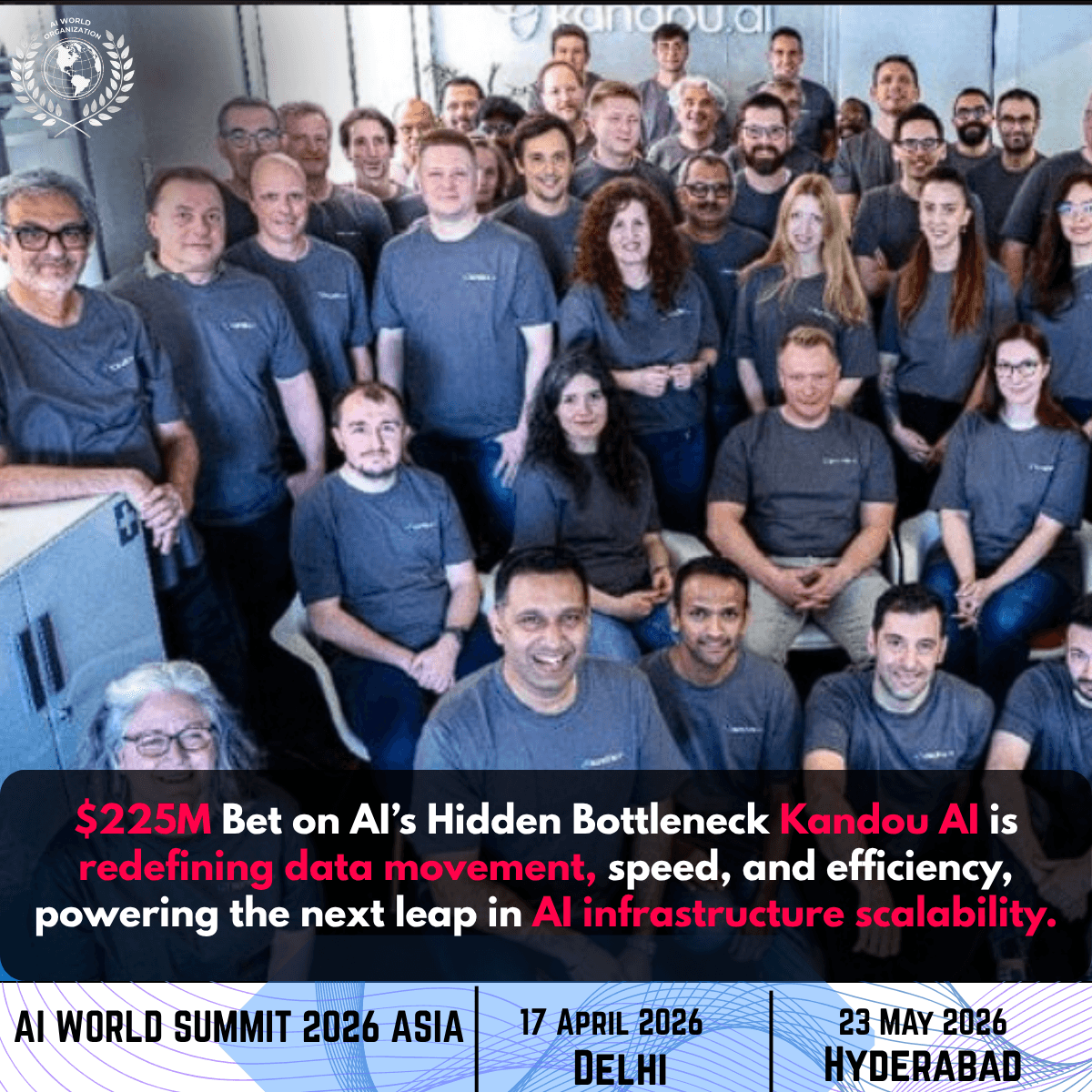
Kandou AI Raises $225M to Solve AI Bottlenecks
Kandou AI secures $225M funding to tackle AI data bottlenecks, improving connectivity, scalability, and efficiency in next-gen AI infrastructure.
TL;DR
Kandou AI has raised $225M with backing from SoftBank Group and others to tackle a growing issue in AI systems—slow and inefficient data movement. Instead of just boosting compute power, the company is focusing on faster, energy-efficient connectivity, aiming to improve performance and scalability in modern AI infrastructure.
Kandou AI Secures $225M to Solve AI’s Biggest Bottleneck in Data Movement
The Rising Challenge of Data Bottlenecks in AI Infrastructure
The artificial intelligence industry is evolving at an unprecedented pace, with models becoming larger, more complex, and significantly more data-intensive. While most discussions around AI growth focus on computational power and GPU advancements, a critical yet often overlooked constraint is emerging—data movement. As AI systems scale, the ability to efficiently transfer data between processors, memory, and storage systems is becoming the defining factor in performance and scalability.
In the latest AI funding news, semiconductor innovator Kandou AI has stepped into the spotlight by raising an impressive $225 million in a Series A funding round. This funding marks a significant milestone not only for the company but also for the broader AI infrastructure ecosystem.
The round was led by Maverick Silicon, with participation from major industry players including SoftBank Group, Synopsys, Cadence Design Systems, and Alchip Technologies. This strong backing highlights growing investor confidence in solving one of AI’s most pressing infrastructure challenges.
At AI World, this development reflects a broader shift in how the industry views scalability—not just in terms of processing power but in the efficiency of data flow across systems.
Why Data Movement Is the Real AI Bottleneck
As AI models continue to expand in size and complexity, the demand for faster and more efficient data transfer has grown exponentially. Traditionally, improvements in compute power drove AI performance gains. However, today’s systems are increasingly constrained by how quickly data can move between different components.
This shift represents a fundamental change in the AI landscape. Instead of focusing solely on faster processors, companies must now address the limitations of data connectivity and bandwidth. According to industry insights, inefficient data movement leads to increased latency, higher energy consumption, and reduced system performance.
Kandou AI is positioning itself at the center of this transformation. The company is developing advanced interconnect technologies designed to improve bandwidth, extend data transmission range, and significantly reduce energy consumption. These innovations are particularly critical in large-scale AI deployments, where even minor inefficiencies can lead to substantial performance losses.
What makes this AI funding development noteworthy is the company’s focus on copper-based interconnect solutions. Unlike expensive optical alternatives, Kandou AI’s approach leverages existing infrastructure while enhancing performance through advanced signaling techniques. This not only reduces costs but also accelerates adoption across data centers and enterprise environments.
For organizations tracking AI funding news, this signals a clear trend: the next wave of innovation will be driven by infrastructure optimization rather than just compute expansion.
How Kandou AI Plans to Transform AI Hardware
With over 20 million silicon units already shipped using its technology, Kandou AI brings significant experience to the table. The company specializes in high-speed connectivity solutions that enable efficient communication between chips, memory, and systems.
The newly raised $225 million will be directed toward several strategic initiatives. These include scaling production of AI connectivity chips, expanding partnerships with hyperscale data center operators, and accelerating the development of next-generation semiconductor solutions.
A key focus area for Kandou AI is its proprietary SerDes (Serializer/Deserializer) technology. This technology enables high-speed data transmission across copper interconnects, breaking through traditional limitations in bandwidth and efficiency. By pushing beyond the 448G threshold, the company aims to unlock multi-terabit connectivity capabilities—an essential requirement for next-generation AI systems.
In addition to technological advancements, Kandou AI has been expanding its global footprint. The company recently established a new design center in Hyderabad, India, further strengthening its engineering capabilities and tapping into one of the world’s fastest-growing semiconductor talent pools.
From an AI World perspective, this expansion underscores the importance of global collaboration in driving innovation. As AI infrastructure becomes more complex, companies must leverage talent and expertise from across regions to remain competitive.
Strategic Investors Signal Strong Industry Confidence
The participation of leading technology and investment firms in this funding round is a strong indicator of Kandou AI’s potential impact. Investors such as SoftBank Group have a proven track record of backing transformative technologies, particularly in the AI and semiconductor sectors.
Similarly, companies like Synopsys and Cadence Design Systems bring deep expertise in electronic design automation (EDA), enabling faster development and deployment of advanced chip technologies. Their involvement not only provides financial backing but also strategic support in scaling Kandou AI’s solutions.
This combination of financial and technical backing positions Kandou AI as a key player in the evolving AI infrastructure landscape. It also highlights a broader trend in AI funding—strategic investments that go beyond capital to include ecosystem partnerships and technological collaboration.
For readers following AI funding news through AI World, this development reinforces the growing importance of deep-tech startups that address foundational challenges rather than surface-level applications.
The Future of AI Infrastructure and Connectivity
The implications of Kandou AI’s funding extend far beyond a single company. As AI continues to permeate industries ranging from healthcare to finance, the need for scalable and efficient infrastructure will only intensify.
One of the most significant takeaways from this AI funding milestone is the recognition that data movement is becoming the new frontier of innovation. Companies that can optimize connectivity and reduce energy consumption will play a crucial role in shaping the future of AI.
Kandou AI’s approach—combining advanced signaling techniques with cost-effective copper interconnects—offers a promising path forward. By enabling higher performance without significantly increasing costs, the company is helping to democratize access to advanced AI capabilities.
At the same time, the broader industry is likely to see increased investment in similar technologies. As more organizations recognize the limitations of existing infrastructure, demand for innovative solutions will continue to grow.
From the perspective of AI World, this trend aligns with the organization’s mission to highlight transformative developments in AI and foster discussions around the future of technology.
Conclusion: A Defining Moment in AI Funding and Innovation
The $225 million funding round secured by Kandou AI represents a pivotal moment in the evolution of AI infrastructure. While much of the industry’s focus has been on computational power, this development shifts attention to an equally critical factor—data movement.
By addressing the bottlenecks that limit AI performance, Kandou AI is positioning itself as a key enabler of next-generation systems. The strong backing from leading investors further validates the importance of this approach and signals growing confidence in the company’s vision.
For stakeholders across the AI ecosystem, this AI funding news serves as a reminder that innovation is not limited to algorithms and models. The underlying infrastructure plays an equally important role in determining the success and scalability of AI technologies.
As the industry continues to evolve, companies that prioritize efficiency, scalability, and cost-effectiveness will be best positioned to lead the next wave of innovation. Kandou AI’s latest funding round is a clear step in that direction, marking the beginning of a new chapter in the AI infrastructure revolution.


