C2i Semiconductors Extends Series A to $16.7M
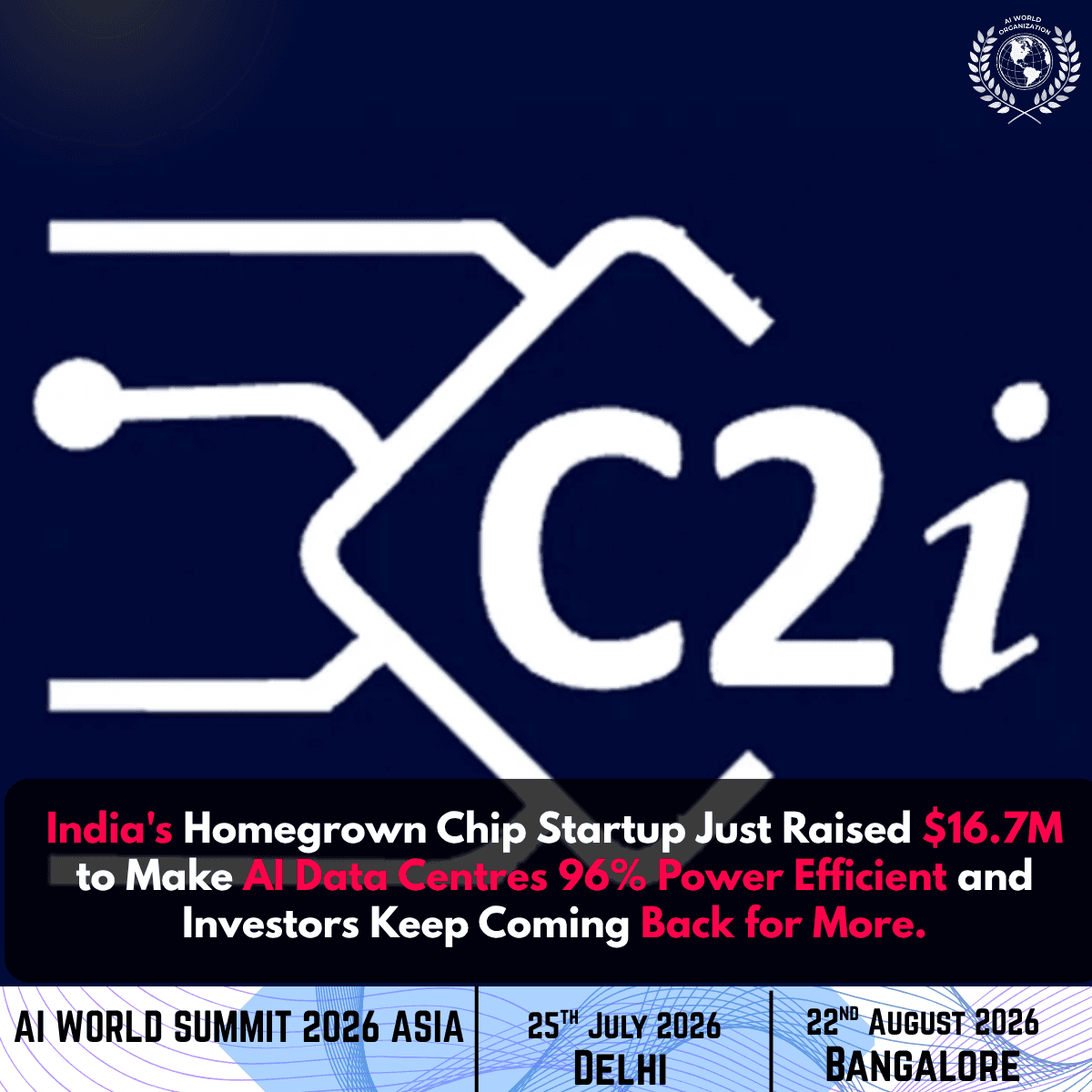
Bengaluru's C2i Semiconductors extends Series A to $16.7M with TDK Ventures. The AI startup targets 96%+ power efficiency for next-gen AI data centres.
TL;DR
C2i Semiconductors, a Bengaluru-based power chip startup founded in 2024, has extended its Series A to $16.7M — with TDK Ventures backing it for the second time in an oversubscribed raise. The company builds power management solutions for AI data centres, targeting over 96% conversion efficiency that could save large facilities nearly $12M annually in energy costs.
C2i Semiconductors Closes Extended Series A at $16.7 Million as TDK Ventures Doubles Down on India's AI Power Chip Revolution
There are moments in the startup world where a funding announcement tells you more than the dollar figure alone. When an investor not only joins a round but returns — without hesitation — to back an extension of that very same round, it speaks to a level of conviction that goes beyond standard portfolio strategy. That is precisely the kind of story unfolding around C2i Semiconductors, a Bengaluru-based startup that has just closed an extended Series A round worth $16.7 million, with TDK Ventures participating in both the original raise and the oversubscribed follow-on.
For those watching India's deeptech ecosystem closely, this development is one of the more significant signals in the semiconductor space this year. C2i is not building another software layer on top of existing hardware. It is doing something considerably harder — and considerably more important — by redesigning how power flows through AI data centres, from the grid all the way down to the processor core. In a world where AI infrastructure is consuming energy at a pace that is genuinely alarming even by the standards of the hyperscalers building it, a company that can meaningfully improve power conversion efficiency is not just commercially attractive. It may well be essential.
At The AI World, we track the full spectrum of AI-related innovation — from large language models and generative applications to the infrastructure and hardware layer that makes all of it possible. C2i Semiconductors sits squarely in that second category, and the progress this company has made in under two years puts it firmly on our radar as one of the most interesting hardware plays emerging from India's startup ecosystem right now.
A Funding Journey Built on Compounding Conviction
To appreciate what this Series A extension represents, it helps to trace how quickly and deliberately C2i has moved since its founding. The company was established in June 2024 by a six-person co-founding team — Ram Anant, Vikram Gakhar, Preetam Tadeparthy, Dattatreya Suryanarayana, Harsha S B, and Muthusubramanian N V — each bringing substantial expertise in semiconductor engineering, power electronics, and system architecture. That founding team composition alone was a signal that something serious was being built.
Within just a few months of incorporation, in November 2024, the company secured $4 million in seed funding from Yali Capital, a deeptech-focused venture fund with a clear thesis around hardware and semiconductor investment in India. For a company less than six months old at that point, landing institutional backing from a fund with genuine domain expertise in deep technology was a meaningful early validation.
By February 2026, C2i had moved rapidly enough in its technology development that Peak XV Partners — one of India's most influential and respected venture firms — was willing to lead a $15 million Series A round. That round also included participation from Yali Deeptech and TDK Ventures, the corporate venture arm of Japanese electronics giant TDK Corporation. The combination of Peak XV's institutional credibility and TDK Ventures' deep strategic relevance to the semiconductor space made this one of the more noteworthy early-stage hardware fundraises India had seen in some time.
Now, with the round extended to $16.7 million and described by the company as oversubscribed — meaning investor demand exceeded what C2i initially set out to raise — the narrative around this startup has only grown stronger. The fact that TDK Ventures participated in both the original Series A and the extension is not incidental. It signals genuine strategic alignment, not just financial interest. The new capital will be channelled into expanding the company's operations and accelerating the development of its product pipeline, both of which are deeply intertwined goals for a company building custom silicon at this stage.
Rethinking Power Delivery from the Ground Up
To understand why investors keep finding their way back to C2i, you need to understand what the company is actually building — and why the approach it has taken is genuinely different from what existing power management players offer.
The core problem C2i is solving is this: as AI workloads become more demanding and GPU clusters become more dense, the way data centres convert and deliver electrical power to processors becomes a critical efficiency bottleneck. Traditional power management solutions were designed for an era of more predictable workloads and more modest power requirements. They were not designed for the variable, high-current demands of modern AI inference and training environments. C2i's founders identified this gap early, and they have been building toward it with a platform that approaches the problem at the system level.
Central to C2i's technology stack is the Manas Controller — a software-defined controller that the company describes as having a unique control architecture. What makes it particularly notable is that it is designed to be agnostic to changes in the Power Delivery Network and processor requirements. In practical terms, this means that as processor generations evolve and workload characteristics shift, the Manas Controller can adapt intelligently without requiring a fundamental hardware redesign at the controller level. In an industry moving at the speed AI hardware currently is, that adaptability is not a minor feature — it is a strategic asset.
Working alongside the Manas Controller is the Sarayu Power Stage, which operates in conjunction with C2i's Modular Scalability architecture to support flexible phase operations designed for higher-current applications. The platform also integrates support for Voltage Positioning Design architecture and voltage regulators, giving it the range to handle the complex and varied power delivery requirements of next-generation AI silicon configurations.
What perhaps best illustrates how seriously C2i is executing on its roadmap is the recent announcement of the tape-out of its smart power stage chip — a major milestone in semiconductor development that marks the point at which a chip design is formally sent to a foundry for fabrication. For a startup less than two years old, reaching tape-out is a significant achievement. The fact that this chip was developed entirely in-house and entirely in India, by C2i's own semiconductor engineering team, adds another dimension to that accomplishment. It positions C2i not merely as a chip design house outsourcing fabrication, but as a company with genuine end-to-end capability being built on Indian soil.
The Numbers That Make This Market Impossible to Ignore
No matter how compelling the technology story is, investor enthusiasm ultimately connects back to market reality. In C2i's case, the market context is, if anything, more dramatic than the technology itself.
Industry research and projections suggest that AI infrastructure capital expenditure is on a trajectory to reach somewhere between $500 billion and $600 billion over the next 12 to 18 months. Looking further out, that figure is expected to approach or surpass $1 trillion by 2030. This spending reflects the combined buildouts of hyperscalers, major cloud platforms, national sovereign AI programmes, and enterprise infrastructure investments happening simultaneously across the United States, Europe, the Middle East, and Asia. Every dollar of that infrastructure spend either runs on power or generates heat — and often both.
Within that enormous flow of capital, efficiency is one of the most intensely contested dimensions of competition. The reason is structural. Data centre operators effectively pay for energy twice: once to run the compute, and a second time to manage the heat that compute generates. Any technology that reduces waste at the power conversion stage compounds its benefits across both of those cost lines. A company that can deliver higher efficiency and lower thermal output simultaneously is addressing both problems at their root.
C2i's platform is designed to achieve power conversion efficiency of over 96%, compared to the approximately 94% that current incumbent solutions typically deliver. The gap may sound modest in relative terms, but the absolute financial impact at scale tells a different story. In a 100 MW AI data centre — a scale that major hyperscalers regularly operate — C2i's own modelling suggests that the efficiency improvements, combined with reduced heat generation, could translate into approximately $12 million in annual energy savings. For an operator running multiple such facilities, those numbers stack up in a way that makes switching to a more efficient power management solution not just attractive but commercially compelling.
The thermal dimension of C2i's advantage is equally significant and often underappreciated. The company's technology is said to enable processors to run up to 4°C cooler than they would with competing solutions. In high-density GPU server environments, sustained thermal reduction at that level can meaningfully extend hardware lifespan. Given that the capital cost of equipping a large AI data centre runs into the hundreds of millions of dollars, any technology that credibly extends the usable life of that hardware delivers a return that stacks directly on top of the direct energy savings. It is a compounding value proposition, and it is the kind of proposition that procurement teams at large data centre operators will find very difficult to set aside.
Why TDK Ventures Keeps Coming Back: Reading the Strategic Signal
It would be easy to treat TDK Ventures' repeat participation in C2i's funding as simply part of a well-managed investor relations strategy. But TDK Ventures is not a generalist fund that spreads capital indiscriminately across every interesting startup it encounters. The fund operates with a clear strategic focus on materials science, energy, and the enabling technologies that underpin advanced electronics — areas that map directly onto TDK Corporation's broader business interests as one of the world's leading manufacturers of electronic components, sensors, and energy storage devices.
For TDK, backing C2i is not just a financial bet. It is a strategic window into a category of technology — AI power management — that is likely to become one of the defining technical procurement decisions for data centre operators over the next five to ten years. If C2i's approach gains adoption at scale, the specifications and requirements it establishes will ripple through the supply chain in ways that directly affect the markets TDK serves. Being close to that innovation as it develops gives TDK early visibility into where the next generation of power electronics design is heading.
There is also a broader geopolitical and industrial context worth acknowledging. The global semiconductor industry has spent the past several years in a deliberate process of geographic diversification, driven by supply chain disruptions, export controls, and sustained government policy efforts in the United States, Japan, Europe, South Korea, and India. Within that context, a Bengaluru-based startup attracting repeat investment from a major Japanese corporate venture fund is a meaningful data point about the maturation of India's semiconductor ecosystem — and about the growing international recognition that meaningful innovation in this space is no longer the exclusive domain of Silicon Valley, Taiwan, or South Korea.
India's Semiconductor Story Is Being Written in Real Time
Zoom out far enough from any single funding announcement, and patterns begin to emerge. C2i Semiconductors' extended Series A is not an isolated event. It is part of a larger story about what India's deeptech ecosystem is becoming, and about the role that AI infrastructure investment is playing in accelerating that transformation.
India has long been recognised as a world-class source of semiconductor design talent. What has historically been less developed is the infrastructure, capital, and institutional ecosystem to support companies that want to own full-stack semiconductor products — not just provide design services to foreign fabless companies. C2i is one of a growing number of startups attempting to close that gap, and its trajectory to date suggests it is doing so with a level of technical seriousness and commercial clarity that earns genuine respect.
The company's end-to-end chip tape-out, completed domestically by an in-house team, is exactly the kind of outcome that India's semiconductor policy initiatives have been structured to enable. It demonstrates that the combination of engineering talent, institutional capital, and growing ecosystem support is beginning to produce results that can stand alongside what is being done in any other semiconductor innovation centre globally.
At The AI World, we believe the infrastructure layer of artificial intelligence is one of the most important and underreported dimensions of the broader AI story. Foundation models capture headlines, but the chips, power systems, and networking technologies that make AI compute possible at scale will shape the trajectory of the technology just as profoundly as any breakthrough in model architecture. C2i Semiconductors is building at the heart of that layer, and the compounding investor conviction behind it — from Peak XV's institutional backing to TDK Ventures' strategic repeat participation — reflects a genuine belief that what this Bengaluru-based team is building is not just commercially viable but potentially transformative.
We will be watching closely as the company moves from tape-out to deployment, and as the broader AI infrastructure market begins to grapple with the energy efficiency challenges that companies like C2i have been quietly building solutions for since the very beginning.