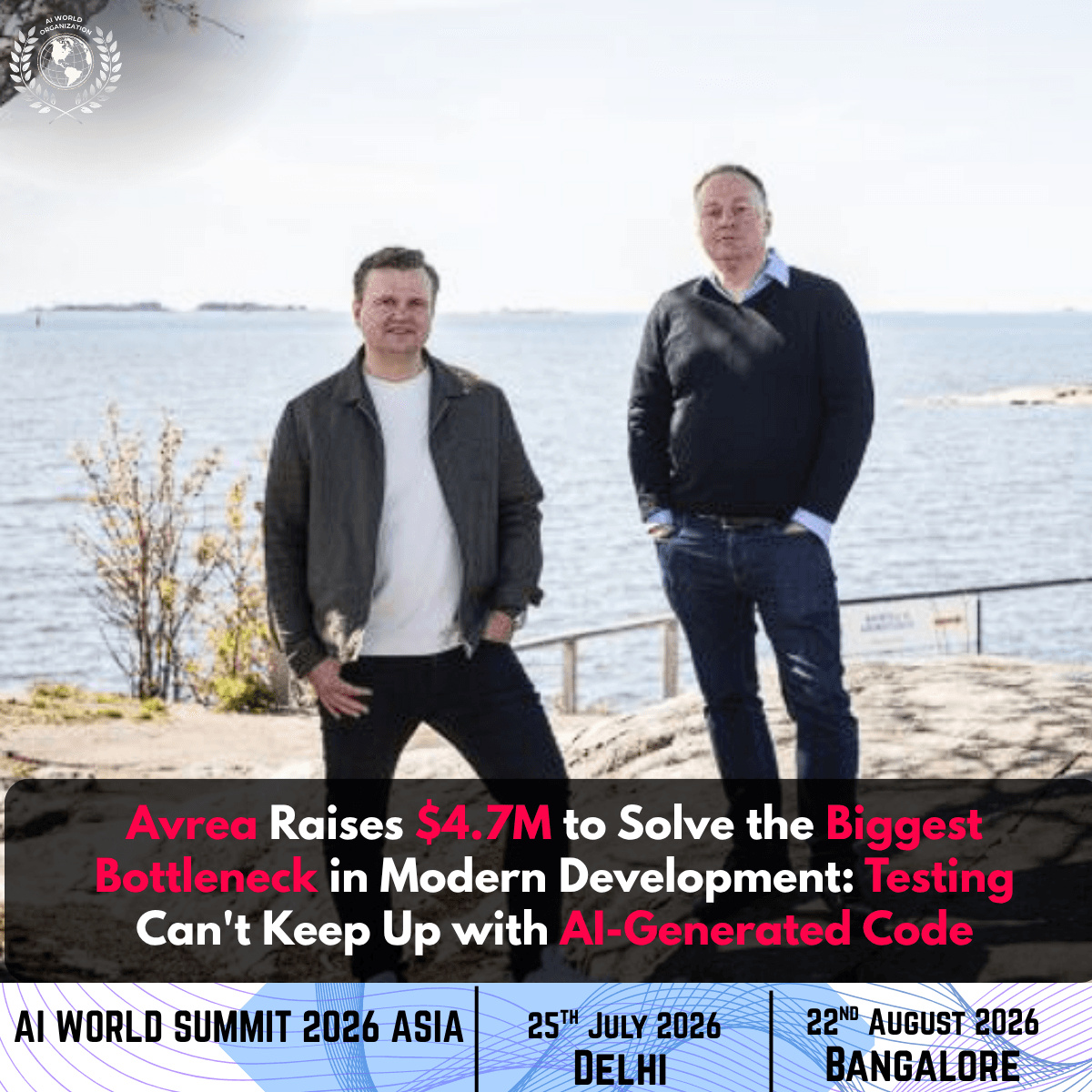
Avrea Raises $4.7M for AI Software Testing Platform
Helsinki startup Avrea secures $4.7M led by Earlybird to solve software testing bottlenecks in the AI code generation era. Learn about their innovative approach.
TL;DR
Helsinki-based Avrea just landed $4.7 million in pre-seed funding led by Earlybird to tackle a major problem plaguing development teams today. While AI tools help engineers write code faster than ever, testing and deployment pipelines haven't kept up, creating dangerous bottlenecks. Founded by proven entrepreneurs behind unicorn Aiven and Nosto, Avrea's platform uses intelligent agents to identify what's slowing teams down and help ship code safely at AI speed.
Helsinki-Based Avrea Secures $4.7 Million to Revolutionize Software Testing in the AI Code Era
The landscape of software development is undergoing a dramatic transformation as artificial intelligence reshapes how code gets written, tested, and deployed. While AI coding assistants have accelerated the pace of development, the infrastructure supporting quality assurance hasn't kept up with this breakneck speed. Enter Avrea, a Helsinki-based startup that just emerged from stealth mode with a compelling vision and $4.7 million in pre-seed funding to solve one of the industry's most pressing bottlenecks.
The funding round, led by prominent venture capital firm Earlybird, closed in just a few weeks—remarkably without an initial pitch deck. This rapid close signals strong investor confidence in both the founding team and the problem they're tackling. For a pre-seed stage company, raising nearly five million dollars in such a short timeframe demonstrates the urgency investors feel about addressing software deployment challenges in our AI-driven development environment.
The Growing Crisis in Software Quality Control
Modern development teams have embraced AI-powered coding tools with remarkable enthusiasm. Platforms like GitHub Copilot, Cursor, and Claude Code have fundamentally changed how engineers write software, enabling them to produce code at speeds that would have seemed impossible just a few years ago. These tools leverage advanced language models to suggest code completions, generate entire functions, and even architect complex systems based on natural language descriptions.
However, this acceleration in code generation has created an unexpected consequence. The testing and quality assurance processes that ensure code reliability, security, and performance haven't evolved at the same pace. Traditional testing frameworks and deployment pipelines were designed for a different era—one where human developers wrote every line of code deliberately and methodically. When AI generates code at machine speed, these legacy systems become significant bottlenecks, forcing development teams to wait hours or even days for testing cycles to complete.
The implications extend beyond mere inconvenience. Security vulnerabilities are being deployed to production environments because testing infrastructure can't keep pace with the volume of code changes. Development teams find themselves in a paradoxical situation where their ability to write code has accelerated dramatically, but their capacity to ship that code safely has remained relatively stagnant. This disconnect represents both a significant business risk and a massive opportunity for companies that can bridge the gap.
Avrea's Innovative Approach to Development Pipeline Optimization
Founded in 2025, Avrea has built an intelligent platform that addresses these challenges head-on. Rather than replacing existing deployment infrastructure, the company's software integrates seamlessly with the tools engineering teams already use. This integration provides unprecedented visibility into the factors slowing down software delivery—identifying low-quality tests, pinpointing where builds get stuck, and highlighting resource bottlenecks that force developers to wait instead of shipping.
The platform employs AI agents that automatically monitor development pipelines and identify optimization opportunities. These agents analyze patterns across the entire software delivery lifecycle, learning which tests provide genuine value and which create friction without meaningfully improving code quality. By surfacing these insights, Avrea enables engineering leaders to make data-driven decisions about how to structure their testing and deployment processes.
What makes this approach particularly compelling is its focus on actionable intelligence rather than simply collecting metrics. Many existing tools can tell you that your deployment pipeline is slow, but they don't explain why or suggest specific remediation strategies. Avrea's AI-powered analysis goes deeper, identifying root causes and recommending concrete steps to reduce waiting time and accelerate the path from code commit to production deployment.
The company's technology also addresses a crucial human factor in software development. When developers write code and then wait hours for tests to complete, they lose context and momentum. This context-switching carries significant cognitive costs, reducing overall productivity and increasing the likelihood of errors. By shortening these feedback loops, Avrea helps teams maintain flow state and ship features more efficiently.
Proven Leadership Driving Ambitious Vision
The pedigree behind Avrea inspires considerable confidence among investors and industry observers. The company was co-founded by Hannu Valtonen and Juha Valvanne, both of whom bring extensive experience building and scaling successful technology companies. Valtonen previously co-founded Aiven, a cloud infrastructure company that achieved unicorn status and became a category-defining player in its market. Valvanne co-founded Nosto, demonstrating his ability to identify market opportunities and execute against them effectively.
Beyond the co-founders, Avrea has assembled a team of ten professionals drawing talent from renowned technology companies including Spotify and Hoxhunt. This combination of entrepreneurial experience and technical expertise from leading tech organizations positions the company well to execute on its ambitious vision. The team understands both the technical challenges of building developer tools and the go-to-market strategies required to achieve widespread adoption.
Their previous successes also opened doors during the fundraising process. Many of the investors who participated in this round already had relationships with the founding team from prior ventures. Earlybird, which led the round, had previously backed Valtonen's company Aiven, giving them direct experience with his ability to build category-defining businesses. This existing relationship likely contributed to the unusually fast fundraising timeline and the absence of a traditional pitch deck in early conversations.
Paul Klemm, a general partner at Earlybird, emphasized the compelling nature of both the team and the opportunity when explaining the firm's decision to lead the round. He noted that backing Valtonen a second time was straightforward given his track record at Aiven, but stressed that the market opportunity made Avrea particularly exciting. With AI driving an explosion in the volume of code being written, the systems responsible for testing and deploying that code are rapidly becoming critical bottlenecks across the software industry.
Strategic Market Approach and Growth Plans
With fresh capital secured, Avrea plans to focus its initial go-to-market efforts on the European market. The co-founders cite several strategic reasons for this geographic focus, including Europe's strong engineering culture, its growing artificial intelligence ecosystem, and increasing attention to developer productivity across the continent. European technology companies have historically placed significant emphasis on engineering excellence, making them natural early adopters for tools that promise to enhance development efficiency.
The company's growth strategy centers on three primary areas of investment. First, Avrea intends to scale its engineering team significantly, bringing on additional technical talent to expand the platform's capabilities and ensure it can integrate with the diverse array of tools modern development teams use. Second, the company will invest in platform development, adding new features and expanding the range of insights its AI agents can provide. Third, Avrea plans to accelerate its go-to-market activities, building awareness among potential customers and establishing the partnerships necessary to reach engineering teams at scale.
Diversity represents a core priority as the company builds out its team. The co-founders explicitly recognize diversity as a key driver of innovation, stronger team dynamics, and better product outcomes. They've committed to building a highly international and diverse organization, understanding that varied perspectives and backgrounds contribute to more creative problem-solving and more comprehensive product development.
While the company hasn't disclosed its current valuation or specific revenue metrics—noting that it's currently in a pre-revenue stage approximately six months after founding—the substantial pre-seed raise suggests strong investor conviction in the long-term opportunity. Pre-seed rounds of this size are relatively uncommon, typically reserved for companies with exceptional founding teams tackling large, well-defined market opportunities.
Competitive Landscape and Market Positioning
Avrea enters a market currently dominated by established players like GitHub and GitLab, both of which were built in the late 2000s. These platforms have become essential infrastructure for software development teams worldwide, handling version control, code review, and deployment processes for millions of developers. However, both were architected before the current wave of AI-powered development tools emerged, potentially creating an opportunity for newer platforms purpose-built for the AI era.
The fundamental shift toward AI-generated code changes the economics and dynamics of software testing in ways that legacy platforms weren't designed to address. When AI can generate thousands of lines of code in seconds, testing strategies designed for human-paced development become inadequate. Avrea's platform recognizes this shift and builds intelligence around it, using AI not just to generate code but to understand and optimize the entire development lifecycle.
The competitive dynamics extend beyond direct platform competition. Avrea must also establish itself in a market where development teams have invested significantly in existing toolchains and processes. Convincing engineering organizations to adopt new infrastructure requires demonstrating clear value and ensuring smooth integration with established workflows. The company's strategy of complementing rather than replacing existing platforms helps address this challenge, reducing the barriers to adoption.
Lessons for the Broader Startup Ecosystem
The Avrea funding story offers valuable insights for other founders navigating the venture capital landscape. The co-founders emphasize several factors that contributed to their successful raise, starting with clear articulation of the problem they're solving and their unique approach to addressing it. Investors needed to understand not just the current state of the market, but how Valtonen and Valvanne anticipated it would evolve and why Avrea's product was positioned to win in that future environment.
The rapid fundraising process—closing in weeks without an initial pitch deck—stands out as particularly unusual. The co-founders attribute this to their focus on direct, substantive conversations rather than formal presentations. By engaging investors in deeper discussions about vision and strategy early, they were able to secure commitment from partners who truly understood and shared their long-term objectives. They did eventually prepare comprehensive materials for due diligence and investment committee discussions, but by that point, core alignment on vision had already been established.
For founders without existing investor relationships, this approach may be more challenging to execute. However, the underlying principle remains valuable: focus on finding investors who genuinely understand your market and share your vision for how it will evolve, rather than simply seeking capital from any available source. The Avrea team paid careful attention to each potential investor's portfolio, speaking with founders they'd previously backed to understand their approach to partnership and value creation.
The emphasis on clear messaging resonates across startup fundraising more broadly. Investors encounter countless companies claiming to solve important problems, and differentiating yourself requires precise articulation of not just what you're building, but why your specific approach will succeed where others might fail. Understanding your go-to-market strategy, team building plans, and path to scale demonstrates the operational sophistication investors seek in founding teams.