QuoIntelligence Raises €7.3M for AI Cyber Intel
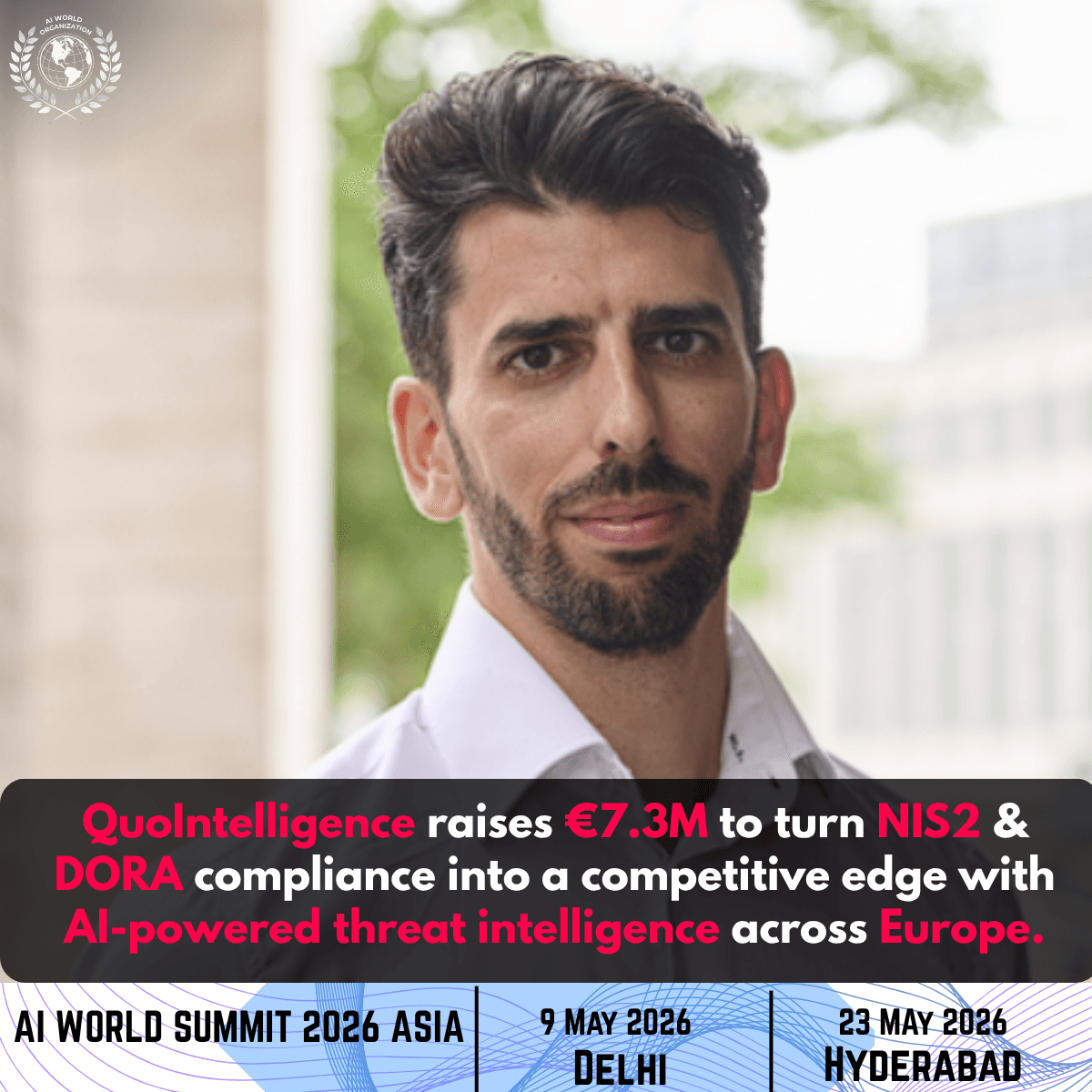
QuoIntelligence secures €7.3M Series A led by Elevator Ventures to expand its AI-powered threat intelligence platform across Europe amid NIS2 and DORA compliance demand.
TL;DR
QuoIntelligence, a Frankfurt-based cybersecurity startup, has raised €7.3M in a Series A round led by Elevator Ventures and BMH, with eCAPITAL returning as a backer. The company helps mid-sized European businesses meet growing NIS2 and DORA compliance demands through its threat intelligence platform — blending AI tools with human analyst expertise to deliver clear, actionable security insights.
QuoIntelligence Secures €7.3M in Series A to Strengthen AI-Powered Cyber Threat Intelligence Across Europe
European cybersecurity is undergoing a quiet but significant transformation, and the latest AI funding news out of Frankfurt is a clear signal of where the industry is heading. QuoIntelligence, a Germany-based threat intelligence startup, has announced it has successfully closed a €7.3 million Series A funding round, backed by some of Europe's most active venture capital players. The round was led by Elevator Ventures, the venture capital arm of Raiffeisen Bank International, with BMH serving as co-lead investor. Returning backer eCAPITAL Entrepreneurial Partners, which had previously led the company's €5 million seed round back in 2023, also came back to the table for this round, joined by Mercurius Private Equity. The deal reflects growing institutional confidence in AI-driven cybersecurity tools, especially as European regulatory frameworks begin to put real teeth into compliance obligations for thousands of organisations across the continent.
This particular AI funding milestone carries significance beyond the numbers. It represents a broader pattern that The AI World Organisation has been tracking closely — the convergence of regulatory compliance pressure and artificial intelligence adoption within the cybersecurity sector. Europe is at an inflection point when it comes to digital resilience, and startups like QuoIntelligence are finding themselves at the precise intersection of technology innovation and legal necessity. The fresh capital raised will go toward expanding QuoIntelligence's footprint across Europe, accelerating product development, and scaling its team at a critical moment in the continent's cybersecurity evolution.
From Frankfurt to Europe: The Story Behind QuoIntelligence
QuoIntelligence was founded in Frankfurt, Germany, in February 2020 by Marco Riccardi, emerging as a spinoff from QuoScient's intelligence team. From the beginning, the company set itself a clear and differentiated goal — to bring institutional-grade threat intelligence to mid-sized organisations that traditionally could not afford dedicated in-house security teams. Rather than building another endpoint detection product or intrusion prevention system, QuoIntelligence took a different path. It built a platform that curates finished intelligence — intelligence that has already been analysed, contextualised, and formatted for immediate action — covering cyber threats, physical security risks, and geopolitical developments that could affect an organisation's operations.
What makes the company's approach particularly compelling in today's AI funding news landscape is how it blends human expertise with machine capability. A team of European analysts works across multiple languages and industry sectors, reviewing and curating the AI platform's outputs in real time. This means clients don't simply receive raw threat data or automated alerts; they receive intelligence that has been filtered through a human lens and translated into actionable recommendations. Whether the end user is a chief information security officer, a risk manager, or a board-level executive with no technical background, the platform is built to deliver insights that are immediately useful without requiring additional interpretation or specialist knowledge.
The jewel in QuoIntelligence's technology crown is KARLA, the company's conversational AI analyst. KARLA acts as an always-on intelligence interface, allowing users to ask questions about the threat landscape, regulatory changes, geopolitical events, or sector-specific risks in plain language. It democratises access to high-quality threat intelligence in a way that has historically been reserved for large enterprises with significant security budgets. For a mid-market manufacturer in Germany or a financial institution in Italy operating under tight resource constraints, KARLA essentially fills the role of an experienced analyst without the associated cost of building that capacity internally.
NIS2, DORA, and the Compliance Wave Fuelling AI Funding in Cybersecurity
Any serious discussion of AI funding in European cybersecurity right now must include NIS2 and DORA — two regulatory frameworks that have fundamentally changed what compliance means for organisations operating in the EU. The NIS2 Directive, which modernises the original Network and Information Systems legislation, dramatically expands the scope of cybersecurity obligations across critical and important sectors including energy, transport, financial services, manufacturing, and government infrastructure. Meanwhile, the Digital Operational Resilience Act, commonly known as DORA, introduces an even more demanding framework specifically for the financial sector, requiring organisations to implement rigorous ICT risk management processes, conduct resilience testing, and maintain strict oversight of third-party technology providers.
Together, these two frameworks are estimated to directly impact more than 160,000 organisations across Europe — and this is precisely the market that QuoIntelligence has built its business around. NIS2's incident reporting obligations and risk management requirements mean that threat intelligence is no longer a nice-to-have capability for large enterprise security teams. It is now a compliance requirement. DORA goes even further for financial entities, mandating initial incident reporting within four hours of detection and imposing personal management liability for non-compliance. Fines under both frameworks can run into the tens of millions of euros, creating a powerful financial incentive for organisations that may have previously underinvested in security to take meaningful action.
Dirk Seewald, managing partner at eCAPITAL Entrepreneurial Partners, captured the shift succinctly: "Threat intelligence is moving from a specialist function into core risk management. As DORA raises the bar for cyber resilience in financial services, the combination of analyst expertise, scalable delivery, and a European operating model becomes more valuable." This view aligns precisely with what The AI World Organisation has observed across the AI funding news space in recent months — capital is flowing toward cybersecurity companies that can translate complex compliance requirements into practical, technology-driven solutions. The regulatory environment has effectively created a floor of demand that did not exist three years ago, and investors are responding accordingly.
A European Identity as a Competitive Differentiator
One of the aspects of QuoIntelligence's positioning that is easy to overlook but carries significant strategic weight is its European identity — not just as a geographic descriptor, but as a core part of its compliance value proposition. The company is formally registered in Germany and maintains offices in Spain and Italy. Critically, all intelligence data is stored and processed within the European Union, with no transfer of sensitive information outside EU jurisdiction. In a market where data sovereignty is increasingly becoming a business requirement rather than a philosophical preference, this architecture gives QuoIntelligence a concrete compliance advantage that non-European competitors simply cannot replicate without significant operational restructuring.
This is a meaningful differentiator when you stack QuoIntelligence against established names in the global threat intelligence space such as Recorded Future, Sekoia.io, Silobreaker, and Flashpoint. While these platforms offer sophisticated capabilities, their data residency and governance structures do not always align with the strict requirements placed on European organisations under GDPR, NIS2, and DORA. A financial institution in Austria or a critical infrastructure operator in Poland, for example, faces genuine legal risk by routing sensitive threat data through systems that do not guarantee EU-only storage. QuoIntelligence's architecture eliminates that risk by design, making the compliance conversation significantly simpler for its target clients. This structural advantage is one of the key reasons investors like Elevator Ventures — itself the VC arm of Raiffeisen Bank International, one of Central and Eastern Europe's most significant banking groups — have placed their backing behind the company.
The involvement of Elevator Ventures also carries a strategic dimension worth examining. Raiffeisen Bank International operates across multiple Central and Eastern European markets, giving Elevator Ventures not only capital to deploy but also a broad network of financial sector relationships that could serve as potential clients or distribution channels for QuoIntelligence's DORA-focused offerings. For a company that is building a channel strategy as one of its primary near-term growth drivers, having an investor with deep ties to the exact sector most affected by the regulations you address is a meaningful operational advantage, not just a financial one.
How the AI Funding Round Will Be Deployed
With €7.3 million now in the bank, QuoIntelligence has outlined a clear set of priorities for how the capital will be put to work. European expansion is the top of the agenda — the company plans to deepen its presence in markets where NIS2 and DORA compliance pressure is most acute, including Germany, Austria, Italy, Spain, and the broader Central and Eastern European region. Given the regulatory timelines involved, the window for organisations to get compliant is narrowing, and QuoIntelligence is positioning itself to be the preferred partner for mid-market organisations navigating that journey.
Product development is the second major area of investment. The company intends to build on the capabilities of its existing platform, enhancing KARLA's conversational intelligence features, expanding the coverage of its regulatory monitoring tools, and deepening the integration between its cyber threat intelligence outputs and the specific compliance frameworks its clients must adhere to. In an AI funding news cycle that is increasingly dominated by generic large language model applications, QuoIntelligence is building something considerably more targeted — an AI-powered intelligence platform that speaks the specific language of European regulatory compliance. That specificity is a strength, particularly for clients who need precise, defensible intelligence rather than broadly applicable AI outputs.
Team growth is the third pillar of the deployment plan. Analyst capacity is at the heart of QuoIntelligence's service model, and scaling the human expertise that underpins the platform's credibility requires deliberate investment in hiring. The company is looking to bring in analysts with sector-specific knowledge across financial services, manufacturing, and government — the three sectors facing the highest compliance burden under NIS2 and DORA. By growing its analyst bench alongside its technology capabilities, QuoIntelligence aims to maintain the quality and depth of its curated intelligence as its client base expands.
What This Means for the Broader AI-Driven Cybersecurity Landscape
The QuoIntelligence Series A is not happening in isolation. It is part of a broader wave of AI funding flowing into European cybersecurity companies as the combination of escalating threat sophistication and regulatory compliance requirements creates a compounding demand signal that investors are finding difficult to ignore. At The AI World Organisation, we have seen this pattern emerge consistently across our coverage of the AI funding news space — the companies attracting capital are not just building clever technology. They are building platforms that solve specific, high-stakes problems for clearly defined customers, and they are doing so within regulatory frameworks that make inaction increasingly expensive.
What QuoIntelligence has built is genuinely differentiated. The combination of AI-powered intelligence gathering, human analyst curation, regulatory compliance alignment, European data residency, and multilingual delivery creates a platform that addresses the precise pain points of the mid-market European organisations that NIS2 and DORA were written to reach. These are not organisations with large in-house security teams or the budget to retain enterprise-level threat intelligence providers. They are manufacturers, financial institutions, logistics companies, and government bodies that suddenly find themselves legally obligated to demonstrate meaningful cyber resilience — and they need a cost-effective, credible partner to help them get there.
The competitive landscape will intensify as more capital flows into this space and as larger players begin to take notice of the compliance-driven demand opportunity. But for now, QuoIntelligence's combination of regulatory focus, European operating model, and AI-human hybrid intelligence delivery gives it a structural position that will be difficult to displace quickly. The €7.3 million raised in this round, combined with the €5 million secured in 2023, gives the company a solid foundation to execute on its expansion plans and establish itself as the benchmark for compliance-grade threat intelligence across the European market. For investors, regulators, and the organisations that must navigate an increasingly demanding cyber resilience landscape, this is a company and a category worth watching closely.


