OpenAI Raises $4B for Enterprise AI Deployment Firm
OpenAI secures $4B from TPG, Brookfield & Bain to launch The Deployment Company, a $10B enterprise AI venture. Full AI funding news breakdown inside.
TL;DR
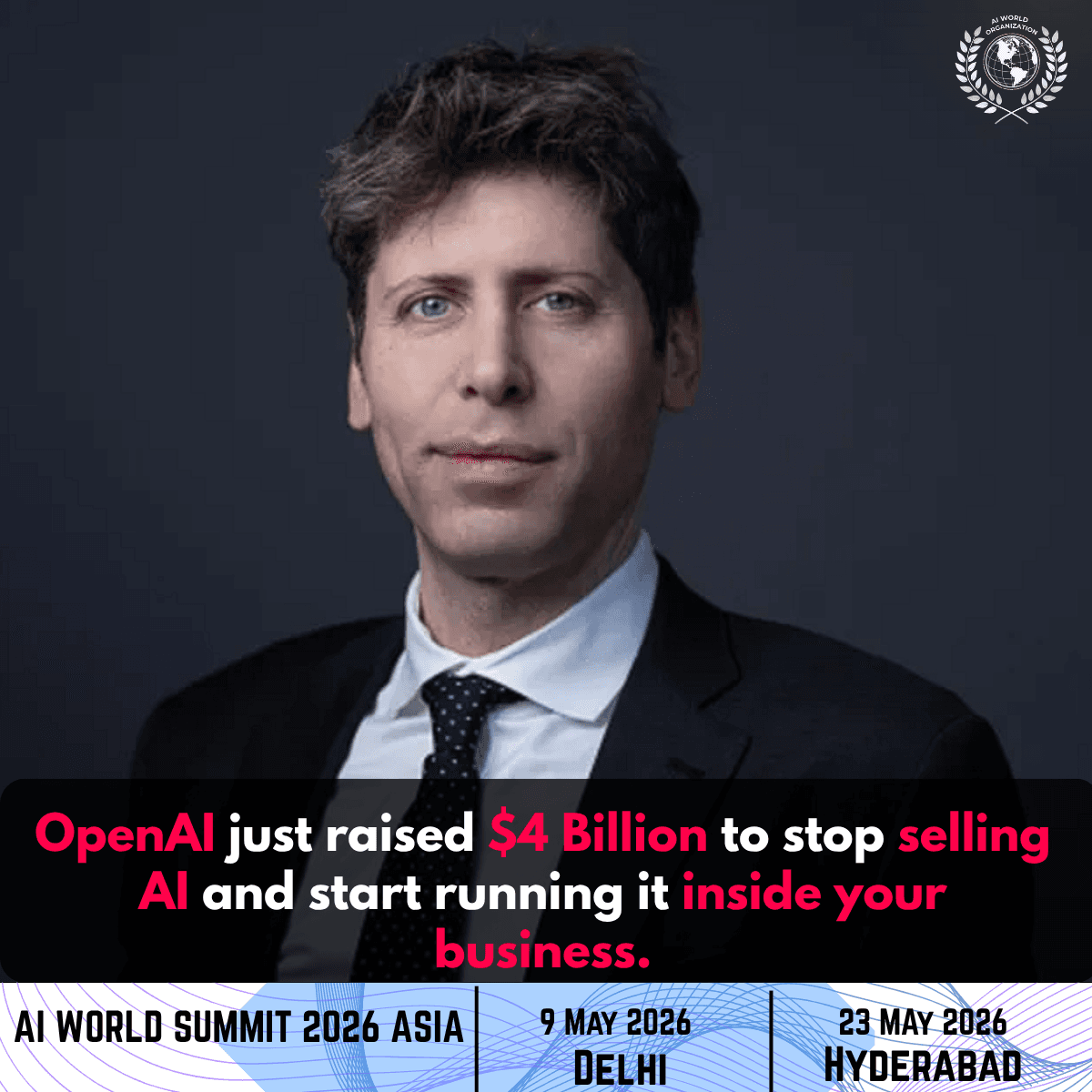
OpenAI has raised over $4 billion from 19 investors — including TPG, Brookfield, Bain Capital, and SoftBank — to launch The Deployment Company, a $10 billion joint venture focused on embedding AI directly into large enterprise operations. Led by Brad Lightcap, the initiative sends forward-deployed engineers into client organisations to build and run AI systems hands-on. Notably, Anthropic launched a near-identical $1.5 billion venture with Goldman Sachs and Blackstone on the same day — signalling that enterprise AI deployment is now the industry's biggest battleground.
OpenAI Raises Over $4 Billion to Launch 'The Deployment Company': A Bold New Chapter in Enterprise AI
The artificial intelligence race is no longer just about building smarter models — it is increasingly about getting those models to work inside the world's largest companies. In a landmark development that is reshaping the landscape of enterprise technology, OpenAI has secured over $4 billion in fresh capital from a coalition of 19 institutional investors to launch a brand-new entity called The Deployment Company. This is one of the most consequential pieces of AI funding news to emerge in 2026, and it signals a decisive shift in how leading AI labs plan to monetise their technology and expand their enterprise footprint.
The new venture, internally referred to in earlier discussions as "DeployCo," is already valued at $10 billion — a pre-money valuation that reflects both the ambition of the project and the confidence that some of the world's most sophisticated investors are placing in OpenAI's ability to deliver at scale. OpenAI will retain majority ownership and operational control of the new entity, ensuring that its technology, culture, and strategic direction remain central to everything the company does going forward.
What Is The Deployment Company and Why Does It Matter?
At its core, The Deployment Company is designed to solve one of the most persistent — and underreported — challenges facing enterprise AI adoption today. While most large corporations now have access to frontier AI tools and platforms, the majority of them lack the specialised engineering talent needed to integrate those tools into their core business operations quickly and effectively. Building a chatbot for internal use is one thing; embedding AI systems into a hospital's patient intake process, a bank's risk assessment pipeline, or a retailer's supply chain management system is an entirely different challenge altogether.
The Deployment Company will address this gap directly. According to details shared by sources familiar with the structure, the new venture will deploy forward-deployed engineers — specialists who embed themselves physically inside client organisations — to build, customise, and maintain AI-powered systems at the operational level. This is not a software-as-a-service model. It is a high-touch, human-in-the-loop services model that treats AI implementation as a professional service rather than a simple subscription. This approach, in many ways, mirrors how leading management consulting firms and technology integrators have traditionally operated — with the crucial difference that the "consulting" here is entirely focused on deploying one of the most powerful AI ecosystems ever built.
From the perspective of AI funding news, this move is also structurally fascinating. OpenAI has made a calculated decision to give its private equity backers a guaranteed annual return of 17.5% over a five-year period — a commitment that provides a financial floor for investors while simultaneously creating a powerful distribution channel. The PE firms investing in this venture manage enormous portfolios spanning healthcare, manufacturing, financial services, retail, logistics, and real estate. Their portfolio companies become, in effect, the first-mover clients for The Deployment Company — a captive but genuinely high-value market that OpenAI now has privileged access to.
The Investor Lineup: Who's Backing OpenAI's Enterprise Vision?
The breadth and calibre of the investor consortium backing The Deployment Company is itself a statement about how seriously the global private equity world is taking enterprise AI deployment. TPG Inc. is anchoring the deal and is among the most prominent names in the coalition, bringing with it a portfolio of companies spread across growth equity, credit, and real estate. Brookfield Asset Management, one of the world's largest alternative asset managers with deep roots in infrastructure and real estate, is also a co-founding investor. Advent International and Bain Capital round out the primary quartet, both of which have extensive networks of mid-market and large-cap companies that stand to benefit from AI-assisted operations.
Beyond these four cornerstone investors, the broader consortium of 19 backers also includes Dragoneer Investment Group and SoftBank Group — the latter being a particularly notable name given Masayoshi Son's long and vocal advocacy for artificial general intelligence and AI-driven business transformation. Several unnamed consulting firms are also part of the structure, which suggests that The Deployment Company may also have partnerships with traditional management consulting networks to help bridge the AI knowledge gap within large enterprises.
It is worth noting that OpenAI itself is contributing an initial $500 million of equity into the venture, with an option to deploy an additional $1 billion at a later stage — bringing its own potential total commitment to $1.5 billion. This is not a case of OpenAI simply licensing its technology to a third-party vehicle. The company is putting significant skin in the game, which further reinforces that The Deployment Company is intended to be a genuine operating business, not just a marketing arrangement or a financial structure.
All four cornerstone PE firms — TPG, Advent, Bain, and Brookfield — are expected to receive board seats and equity stakes in the new joint venture, giving them both governance rights and a genuine financial interest in the success of AI deployments across their combined portfolio companies. This creates a very well-aligned incentive structure: the better the AI implementations perform inside their portfolio companies, the more valuable the whole enterprise becomes for everyone involved.
Brad Lightcap Steps Up: The Human Force Behind the Strategy
Any serious discussion of this AI funding news would be incomplete without focusing on the person leading the charge from OpenAI's side. Brad Lightcap, who served as OpenAI's Chief Operating Officer before recently transitioning into a newly created role focused on special projects with a direct reporting line to CEO Sam Altman, is spearheading OpenAI's push through The Deployment Company.
Lightcap has been one of the most visible and strategically important executives at OpenAI over the past several years, responsible for much of the company's global expansion and its growing enterprise client base. His move into a special projects role — rather than continuing as COO — appears to reflect how seriously OpenAI is treating The Deployment Company as a distinct operational priority requiring its own dedicated leadership. The fact that Altman and Lightcap are personally aligned on this initiative suggests it is not a side project. It is arguably one of the most significant strategic bets OpenAI is making in 2026.
The broader context here matters enormously. OpenAI's revenues from direct API access and ChatGPT Enterprise subscriptions have grown substantially, but there has always been an acknowledged ceiling on how much enterprise value the company can capture if it remains purely a model provider. The Deployment Company is the mechanism through which OpenAI intends to climb that value chain — moving from technology vendor to embedded business partner, from model provider to operational co-creator. For an organisation that began as a non-profit research lab barely a decade ago, this is a striking evolution.
The Anthropic Response: An Industry Trend Takes Shape
One of the most striking aspects of this entire story — and one that elevates it from a single company's AI funding news to a broader industry inflection point — is that within hours of OpenAI's announcement, rival AI lab Anthropic revealed a nearly identical initiative. Anthropic announced that it is partnering with Blackstone, Hellman & Friedman, and Goldman Sachs to build a competing enterprise AI deployment platform, backed by a $1.5 billion investment.
The Anthropic venture is similarly focused on embedding its Claude AI model into the operations of mid-sized and large companies, beginning with the portfolio companies of its investment partners before expanding to the broader market. The consortium also includes Apollo Global Management, General Atlantic, Leonard Green & Partners, GIC, and Sequoia Capital — a formidable lineup that spans growth equity, real estate, and global sovereign wealth.
Goldman Sachs and its collaborators plan to use their own portfolio companies as the initial proving ground for the new platform before scaling outward into sectors including healthcare, manufacturing, financial services, retail, and real estate. This parallel structure to OpenAI's approach is not coincidental — it is evidence that both companies are converging on the same strategic insight: the fastest and most durable path to enterprise AI adoption is not through direct sales to corporate IT departments, but through trusted financial intermediaries who already have operational influence over the companies in question.
Together, the simultaneous launches of The Deployment Company by OpenAI and Anthropic's own enterprise services venture represent a fundamental restructuring of how AI will be implemented across global industries in the years ahead. These are not incremental product launches. They are the AI industry's equivalent of large-scale professional services firms being stood up almost overnight, backed by some of the most powerful capital allocators on the planet.
What This Means for Businesses and the Future of AI Adoption
The implications of this development extend well beyond the financial details of the deal. For businesses across every sector, the emergence of The Deployment Company — and its Anthropic-backed counterpart — represents both an opportunity and a challenge. The opportunity is clear: companies that have been waiting on the sidelines for AI tools mature enough to deploy at enterprise scale may now have access to a far more guided and supported implementation pathway than anything that has existed before.
The challenge, however, is equally real. As AI deployment becomes increasingly intermediated through PE-backed vehicles with guaranteed-return structures and portfolio-level commitments, smaller companies that are not part of these PE ecosystems may find themselves at a disadvantage — both in terms of access to frontier AI capabilities and in terms of the quality of implementation support they can attract.
At The AI World, we see this development as a defining moment in the maturation of the global AI industry. The era of AI funding news being dominated by purely research-focused labs raising capital to train bigger models is giving way to a new era — one in which deployment, integration, and real-world operational impact are the central metrics of progress. The companies and organisations that will shape the next decade of AI-driven business transformation are not just the ones building the best models. They are the ones figuring out how to get those models to work — deeply, reliably, and at scale — inside the messy, complex, human-driven organisations that make up the real economy.
OpenAI's $4 billion raise for The Deployment Company is a statement of intent on that front. It is, in many ways, the most commercially significant thing OpenAI has done since the launch of ChatGPT itself — and it may ultimately prove to be far more transformative for how artificial intelligence reshapes business and society in the years ahead.