Bharat Semi Raises $24 Million to Put AI Inside the Sensor, Not Just the System
Indian semiconductor startup Bharat Semi has raised $24 million in Seed funding to develop programmable image sensors that combine image capture, processing and AI on a single chip for Physical AI applications.
What If a Camera Could Understand What It Sees?
A conventional camera captures an image and sends that information to other components for processing. Bharat Semi wants to change that process.
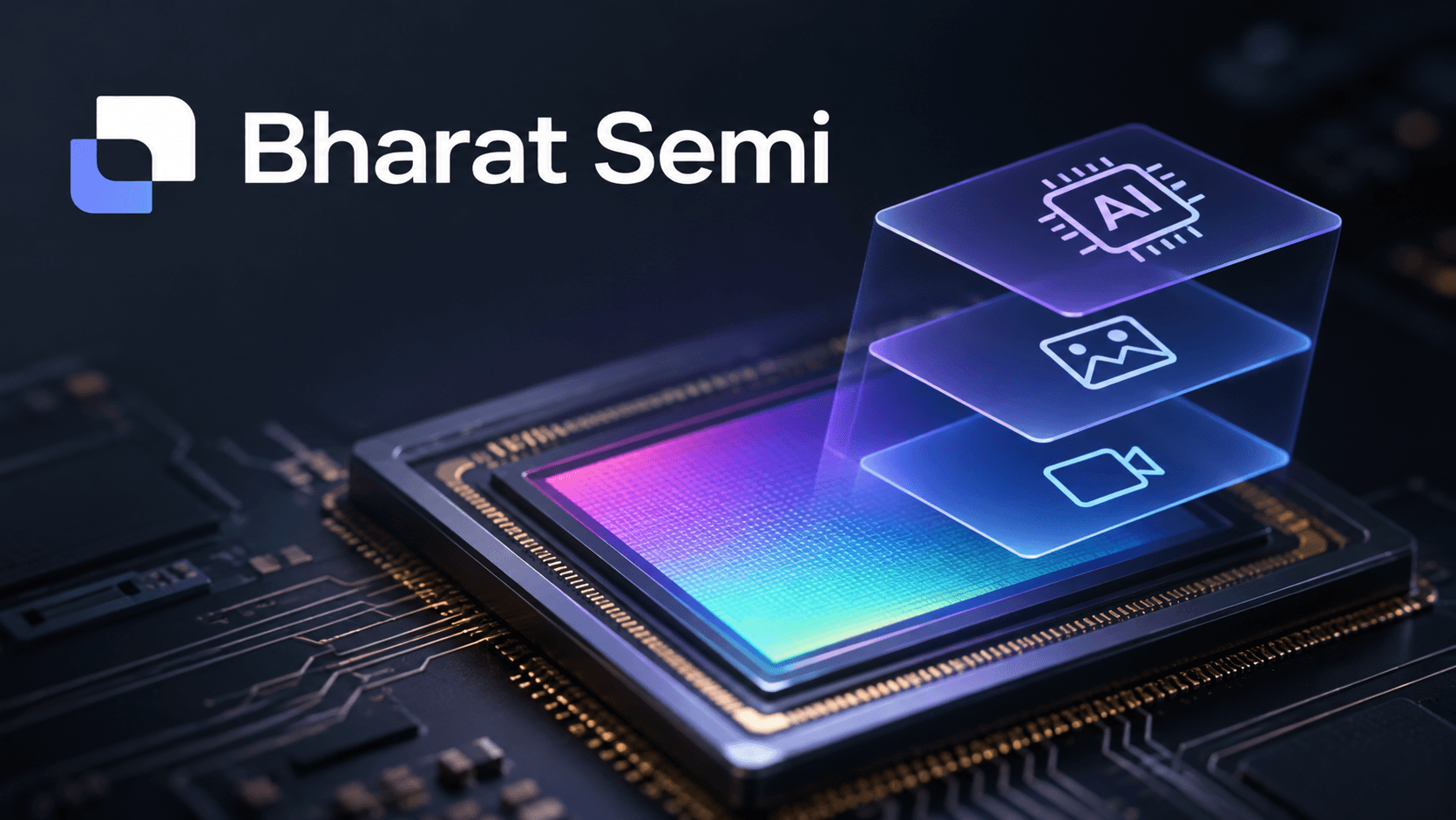
The Indian semiconductor startup is developing programmable image sensors that combine image capture, processing and artificial intelligence on a single chip. Instead of relying on separate components to interpret visual information, its sensors are designed to perform AI inference closer to where the data is captured.
The company has now raised $24 million in an all-equity Seed funding round to take this technology further.
Announced on November 16, 2026, the round was led by Info Edge Group, South Park Commons and IndusBridge Ventures. Micromax, Valour Capital, New York-based Gaingels and angel investors Mukul Agarwal and Karthik Sundar Iyer also participated.
The capital will support product development, engineering team expansion in the United States and efforts to secure global customers.
Founded in 2021, Bharat Semi is positioning its technology for a growing category known as Physical AI, where intelligent systems interact with the real world through cameras, sensors, robots and machines.
From Capturing Images to Helping Machines Understand Them
Bharat Semi's central idea is to bring sensing, processing and AI together rather than treating them as separate stages.
Traditional camera systems typically use an image sensor, an image signal processor and a separate system-on-chip to handle different parts of the imaging process.
Bharat Semi's programmable sensors aim to integrate these capabilities into one solution. This allows AI inference to happen at the point of capture, potentially reducing the amount of visual data that needs to move between components.
Co-founder and CEO Vrinda Kapoor described the ambition in an interview:
"Our aim here is to move from sensors to sense-making solutions."
The difference could matter for devices that need to respond to their surroundings in real time. Rather than sending every image to a remote system for interpretation, machines could process relevant information locally.
The company claims its technology could reduce system costs by at least 70% compared with conventional configurations using separate image sensors, image signal processors and system-on-chip components. This remains a company-reported estimate, not a result from commercially deployed products.
Why Machines Will Need a Different Kind of Sensor
The growing adoption of AI in physical environments is creating new requirements for sensor technology.
Cameras and sensors are increasingly being used not just to record information for people, but to help machines make decisions.
Co-founder Vinayak Dalmia believes this will change the direction of the sensor market.
"In the near future, growth in the sensor market will be driven by capturing data for machines. This data may never be seen by humans, but it will drive AI at the edge," he said.
Bharat Semi is initially targeting consumer electronics and surveillance, with potential applications across smart homes, industrial automation, robotics, vehicles, drones and aerospace.
For example, a smart air conditioner could detect whether a room is occupied and adjust automatically. A drone could process visual information locally without depending on expensive external computing hardware.
These are illustrative use cases shared by the founders, rather than products already available commercially.
From Prototypes to Global Customers
Bharat Semi still has significant development work ahead.
According to TechCrunch, the company's first-generation sensors are already in the prototyping stage. Its second-generation sensors, which will include more advanced AI capabilities, are expected to reach the prototype stage by mid-2027.
The company is targeting initial commercial production in 2027, with its newer sensors expected to reach customers by the end of that year.
Bharat Semi also says it has secured design wins with US defence technology company General Atomics and India's Kaynes Semicon. These are early customer-design milestones, not evidence that the sensors are already in widespread production.
The startup has around 75 employees across India and the United States and plans to expand its US team while continuing to hire engineers in Europe.
Its technical leadership includes CTO Boyd Fowler, who previously held the same position at image-sensor manufacturer OmniVision.
An important distinction is that Bharat Semi plans to remain fabless for this sensor business. It intends to focus on semiconductor design and software while outsourcing chip manufacturing. Its separately proposed semiconductor fabrication project is still under development and is not being financed by this Seed round.
Can India Build a Global Semiconductor Product Company?
India's semiconductor ambitions have largely focused on developing manufacturing capacity, attracting fabrication investments and strengthening supply chains.
Bharat Semi is pursuing another part of the opportunity: building specialised semiconductor products that can compete in international markets.
Vrinda Kapoor described the ambition as a question of whether India can build a globally relevant technology company.
For the founders, the opportunity is not limited to making sensors cheaper or smaller. It is about developing a different approach to how machines perceive and respond to the physical world.
But the next challenge is execution. The company will need to move from prototypes to reliable products, prove its performance with customers and demonstrate that its architecture can work across different industries.
The bottom line: Bharat Semi is betting that the next generation of AI hardware will need sensors that can do more than capture information. Its $24 million Seed round gives the founders resources to develop that technology and pursue global customers. Whether the company can turn its vision into a commercially successful semiconductor product will become clearer as its 2027 production milestones approach.