AMD Warrant Charge: $1.1B Hit From OpenAI and Meta Deals
The AMD warrant charge was about $1.1B in Q3, linked to share rights given to OpenAI and Meta for big chip orders. Revenue still hit a record $13.4B. See what the charge is, the dilution risk and what comes next.
TL;DR
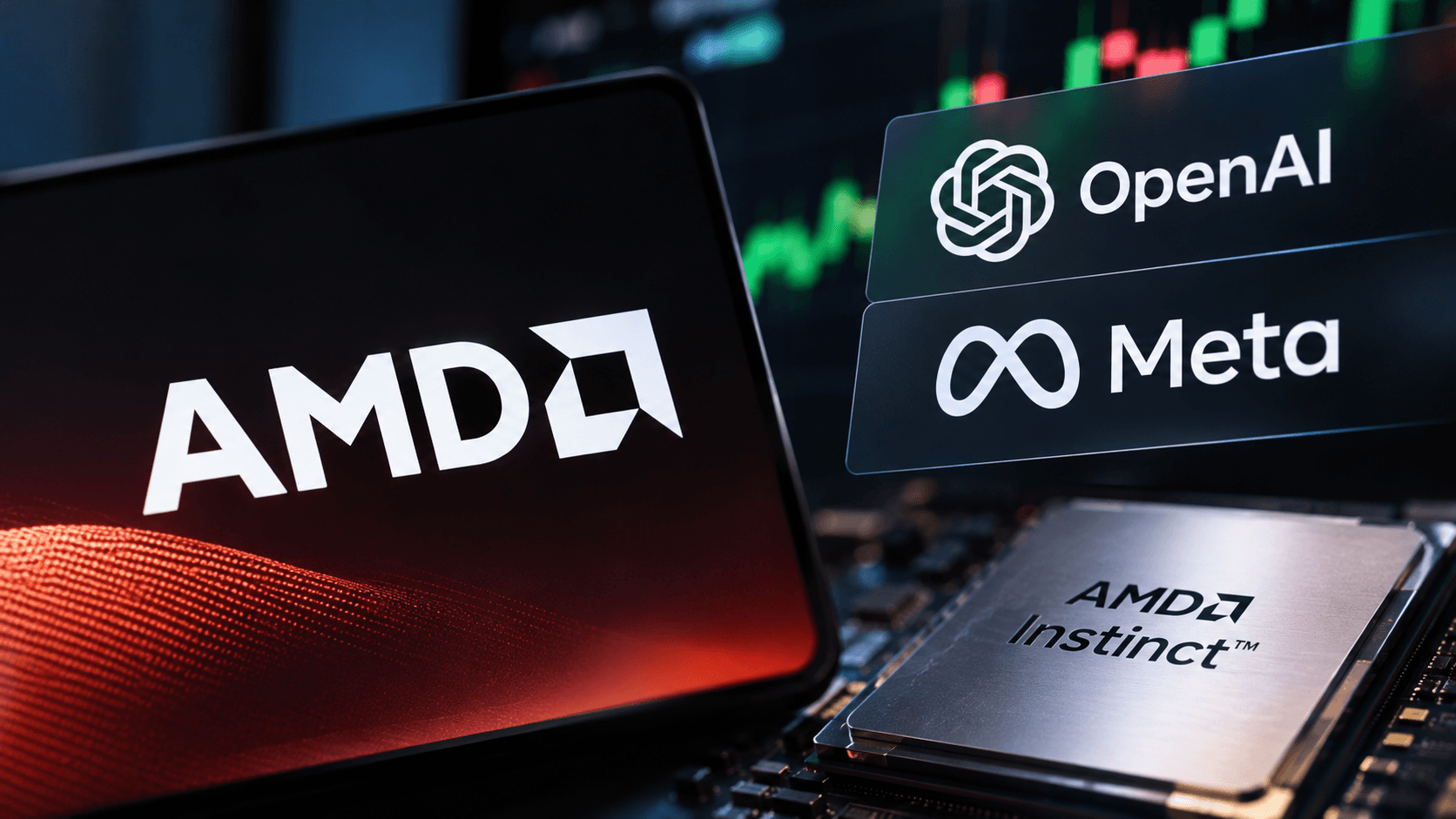
AMD recorded a non-cash charge of about $1.1 billion, or 66 cents a share, in Q3, linked to warrants given to OpenAI and Meta.
The warrants let each customer buy up to 160 million AMD shares for $0.01 each, if purchase and share-price conditions are met.
AMD still posted record revenue of $13.4 billion, up 45%, and data centre revenue rose 97% to $8.5 billion.
AMD guided Q4 revenue to about $17 billion. Shares rose about 8% in after-hours trading.
The warrants dilute AMD shareholders only once their vesting and exercise conditions are met.
AMD Warrant Charge: Why OpenAI and Meta Chip Deals Cost AMD About $1.1 Billion in Q3
The AMD warrant charge is the number investors are talking about after the chipmaker’s record third quarter. AMD booked a non-cash charge of about $1.1 billion, linked to warrants it gave OpenAI and Meta in return for large chip commitments. The warrants let them buy AMD shares for a penny each if certain conditions are met.
The charge did not stop a strong quarter. Revenue hit a record $13.4 billion, up 45% from a year earlier. sec
AMD warrant charge: the key numbers
AMD’s results show a $1,097 million change in the fair value of its warrant liability in Q3. That is 66 cents a share. sec
AMD excludes the charge from its adjusted (non-GAAP) results. Its reported earnings per share were $1.46, and adjusted earnings per share were $2.09. sec
Data centre revenue rose 97% to $8.5 billion. Embedded revenue rose 29%. Client and gaming revenue fell 8%. sec
AMD guided Q4 revenue to about $17 billion, plus or minus 3%. sec
AMD also forecast faster-than-expected growth in 2027, and its shares rose about 8% in extended trading.
What the OpenAI and Meta warrants are
A warrant is a right to buy shares at a set price in the future.
OpenAI and Meta each hold a warrant for up to 160 million AMD shares at an exercise price of $0.01 a share. sec
The shares vest in tranches. They depend on how many AMD Instinct GPUs the customer buys and on AMD share-price targets, and each vested tranche must meet other technical and commercial conditions. sec
OpenAI’s warrant can be used until October 5, 2030, and Meta’s until February 23, 2031. sec
Each warrant covers about 10% of AMD’s current shares, by our calculation. Together they cover about 320 million shares.
Why AMD took the charge
AMD says the charge comes from remeasuring the warrants each quarter. The value changes with AMD’s share price and other valuation assumptions. That means a higher AMD share price makes the charge bigger. Other reporting links it to shipments under the agreements beginning to ramp up.
AMD’s revenue is the same on a reported and adjusted basis, at $13.4 billion, so the charge is not taken out of sales. It is a non-cash item, so no money left the company. sec
The deals behind the warrants
OpenAI: announced in October 2025, a multi-year deal for 6 gigawatts of AMD GPUs, with the first 1 gigawatt of MI450 GPUs set to start in the second half of 2026. sec
Meta: announced in February, a multi-year deal for up to 6 gigawatts, with first shipments scheduled for the second half of 2026. sec
The money: AMD did not publish a dollar value for either deal. Reuters reported that AMD could sell up to $60 billion of chips to Meta over five years. Other estimates put the Meta deal higher, so treat the figure as a reported number. investingYahoo Finance
What this means for AMD shareholders
AMD’s finance chief said the warrants begin to dilute shareholders once OpenAI and Meta meet the vesting and exercise conditions, which include shipments and other commercial requirements. AMD expects to give more guidance in 2027 on when that could happen. AMD does not expect its Q4 share count to be affected by the customer warrants.
If the warrants fully vest and are exercised, OpenAI and Meta could own a large stake in AMD for as little as a penny a share. The ultimate value depends on AMD’s share price when they are exercised.
Not just AMD
Chip customers are getting equity-style rewards across the industry.
Cerebras gave OpenAI warrants against a $20 billion commitment. investing
Marvell gave Google warrants that could give it a stake worth up to $12.2 billion. Read our report on the Marvell Lumentum acquisition. investing
AMD also has a chip arrangement with Anthropic that includes an AMD commitment to invest in Anthropic.
For another view of AI customers locking in supply, read our report on OpenAI’s funding round.
What the AMD warrant charge means
Customers are getting ownership, not just discounts. AMD is paying large buyers with a share of its future success to secure long-term orders.
The cost shows up before the benefit. The charge arrives while shipments are just starting. The revenue those deals bring comes later.
The charge can swing. It is remeasured every quarter, so a rising AMD share price can mean another large charge.
The bull case:
Revenue hit a record, and data centre revenue nearly doubled.
AMD guided Q4 revenue to about $17 billion and forecast faster 2027 growth.
The warrants vest only if the customers buy chips and AMD’s share price hits its targets.
The charge is non-cash, and AMD’s shares rose after the results.
The bear case:
Full vesting could add about 320 million shares.
The charge can change every quarter with AMD’s share price.
A large part of the growth depends on a few big customers.
Client and gaming revenue fell 8%.
The bottom line
AMD had a record quarter and paid an accounting price for the customers behind it. The charge of about $1.1 billion is non-cash, but the warrants behind it could add hundreds of millions of shares if every condition is met. Investors will now watch whether the OpenAI and Meta deals bring enough sales to justify what AMD gave away.