Swiss Biotech ALP Bio Raises €1.9M for AI Drug Platform
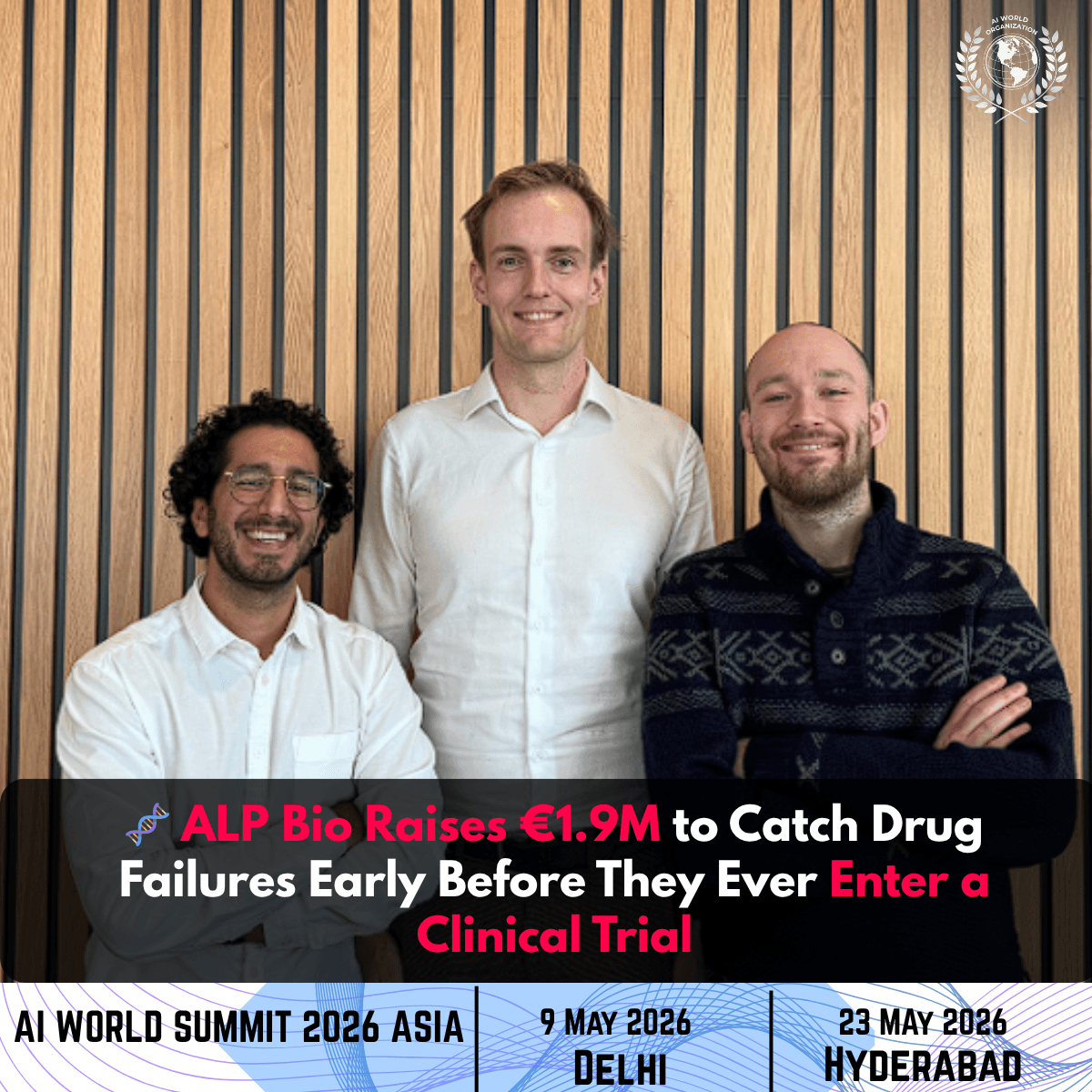
ALP Bio AG secures €1.9M pre-seed funding to advance its AI and immune organoid platform that detects immunogenicity risks early in drug development.
TL;DR
Swiss startup ALP Bio has raised €1.9 million in pre-seed funding to tackle one of biologics' most stubborn problems — late-stage immunogenicity failures. By combining human immune organoids with smart AI models, the company aims to flag drug risks early, saving pharma companies time and millions. The round was led by 42CAP, with support from Venture Kick and strategic angel investors.
Swiss Biotech Startup ALP Bio Secures €1.9 Million to Revolutionize Immunogenicity Detection with AI and Immune Organoids
The global biologics industry has long wrestled with a persistent, expensive, and often underestimated problem — immunogenicity. It is a challenge that has quietly derailed promising drug candidates in the final stages of development, costing pharmaceutical companies hundreds of millions in wasted resources and years of lost time. Now, a young Swiss biotech startup is stepping up to change that. ALP Bio AG, headquartered in Schlieren, Switzerland, has officially closed a €1.9 million pre-seed funding round to accelerate its groundbreaking platform that merges human immune organoid biology with the power of generative artificial intelligence. This latest AI funding news marks a significant step not only for the company but for the broader landscape of drug development innovation.
The round was spearheaded by Munich-based venture capital firm 42CAP, with additional backing from Venture Kick — a Swiss startup promotion initiative — and a group of strategic angel investors who bring deep domain expertise to the table. The capital will be deployed to expand ALP Bio's experimental and computational capabilities, broaden its industry partnerships, and build out scientific and commercial capacity across Switzerland and the United States. For those watching the AI funding landscape, this round signals growing investor confidence in the convergence of biology and machine intelligence as a new frontier in pharmaceutical research.
The Hidden Crisis in Biologics: What Is Immunogenicity and Why It Matters
To understand the true significance of ALP Bio's mission, one must first grasp the scale of the problem the company is setting out to solve. Immunogenicity refers to the tendency of a biological therapy — such as a monoclonal antibody or a recombinant protein — to trigger an unintended immune response in patients. When the human immune system recognizes a therapeutic protein as foreign, it produces what are known as anti-drug antibodies (ADAs). These ADAs can neutralize the treatment's effectiveness, reduce its half-life in the body, or in more serious cases, cause adverse safety events that force clinical trial teams to halt their programs entirely.
What makes this challenge particularly costly is the timing of its discovery. In the current standard of pharmaceutical development, immunogenicity signals typically emerge only during Phase II or Phase III clinical trials — stages where the financial and timeline investment is already at its peak. By that point, reformulating a drug candidate, adjusting its sequence, or abandoning it altogether can cost a company anywhere from tens to hundreds of millions of dollars. The industry has, for decades, largely accepted these late-stage surprises as an unavoidable hazard of the drug development process. ALP Bio is firmly challenging that assumption.
Founded in 2025 by a team of scientists who recognized this bottleneck firsthand, ALP Bio's core thesis is straightforward but scientifically ambitious: bring immunogenicity risk assessment into the early stages of antibody development, where course corrections are still feasible, affordable, and fast. This is the kind of thinking that is reshaping how biotechnology and AI funding news cycles intersect — where capital flows toward solutions that tackle root-cause inefficiencies rather than symptomatic ones.
A Hybrid Platform That Merges Wet-Lab Biology With Generative AI
At the heart of ALP Bio's value proposition lies a technological architecture that is genuinely novel. The company has developed a hybrid platform that integrates two powerful methodologies: experimentally measured human immune organoid readouts and advanced machine learning models capable of interpreting, learning from, and acting on those biological datasets. The result is a system designed to predict immunogenicity risk at the antibody sequence level — long before a drug candidate ever enters a clinical setting.
The biological foundation of the platform is built on human tonsil-derived organoid technology. Tonsils are rich in the immune cell types most relevant to antibody responses, including B cells, T cells, and follicular dendritic cells. By culturing these cells into three-dimensional organoid structures that closely mimic the behavior of human lymphoid tissue, ALP Bio is able to generate immune readouts that are far more clinically relevant than conventional in vitro assays or animal models. This allows the platform to capture nuanced immunological behavior that standard preclinical methods routinely miss.
Layered on top of this experimental biology is a suite of machine learning models that have been trained to recognize patterns in immune organoid data and translate them into actionable predictions. These AI models support several critical functions along the antibody development pipeline: lead candidate screening to identify which molecules are less likely to provoke immune responses, ADA risk stratification to rank candidates by their immunogenicity profile, and sequence optimization to redesign antibody sequences that maintain therapeutic efficacy while reducing immune-triggering potential. Together, these capabilities form what ALP Bio describes as immunogenicity intelligence — a new category of decision-support technology for biologics developers.
This kind of AI-biology integration reflects a broader trend in AI funding news, where investors are increasingly backing platforms that go beyond software-only solutions and instead embed artificial intelligence directly into wet-lab experimental workflows. By building AI that learns from biological signals rather than synthetic or historical data alone, ALP Bio is positioning its platform as more accurate, more generalizable, and more clinically meaningful than competing approaches.
Investor Confidence and the Growing Case for Early-Stage AI Funding in Biotech
The closing of this pre-seed round is a strong vote of confidence from the investment community in both ALP Bio's technology and its broader market thesis. 42CAP, the Munich-based venture capital firm that led the round, has developed a reputation for backing early-stage deep tech and biotech companies at the frontier of scientific and commercial innovation. Their decision to anchor this round speaks to how seriously sophisticated investors are now taking the intersection of AI and immunology.
Thomas Wilke, Partner at 42CAP, offered a perspective that cuts to the core of the platform's appeal: "ALP Bio is doing for biologics what high-throughput screening did for small molecules — collapsing a years-long bottleneck into a tractable design loop. The team's combination of immune organoid biology and sequence-level AI is the most credible attempt we have seen to address immunogenicity at the source." This statement is striking because it frames ALP Bio's platform not merely as a diagnostic tool but as a transformative infrastructure for how the pharmaceutical industry will approach antibody development in the years to come.
Venture Kick's participation further reinforces the narrative. As one of Switzerland's most influential startup support programs, Venture Kick had already backed ALP Bio at an earlier stage — awarding the company CHF 40,000 in Stage II funding to translate its organoid platform into a viable commercial offering. The decision by Venture Kick to follow on in this pre-seed round signals sustained confidence in the team's ability to execute on a complex scientific and business roadmap. For those monitoring AI funding news in Europe, this is exactly the kind of incremental capital strategy that separates durable deep tech companies from early-stage experiments.
The angel investor cohort accompanying the round also brings strategic value beyond capital. According to ALP Bio, these are investors with direct experience in biologics development, pharmaceutical partnerships, and the operational challenges of scaling a biotech startup from laboratory research to commercial deployment. In the highly specialized world of immunogenicity, having advisors who understand both the science and the commercial landscape is arguably as valuable as the funding itself. This is a hallmark of the kind of thoughtful AI funding strategy that is increasingly separating successful biotech ventures from those that struggle to cross the commercialization gap.
Building Partnerships, Scaling Capabilities, and Looking Ahead
Even at this early stage, ALP Bio is not operating in a vacuum. The company has already entered into early-access collaborations with pharmaceutical and biotechnology partners who are exploring how the platform can improve their antibody candidate selection processes and de-risk their development pipelines. These relationships are meaningful for several reasons — they provide ALP Bio with real-world data to further train and validate its AI models, they generate revenue-adjacent traction that can support future fundraising narratives, and they help build the commercial reputation the company will need to secure larger partnerships down the road.
Christian Vahlensieck, CEO of ALP Bio, captured the company's urgency well when he stated: "Immunogenicity is one of the largest hidden costs in biologics, and the industry has accepted late-stage surprises as the norm for too long. This financing lets us scale the experimental and computational foundation of our platform and partner with teams who want to make antibody development more predictable from the start." That statement is not just a founder's pitch — it is a diagnostic of an industry that is ripe for disruption by precisely the kind of data-driven, AI-powered approach that ALP Bio is building.
The pre-seed capital will fund four primary areas of development. First, ALP Bio plans to expand and upgrade its immune organoid laboratory infrastructure, increasing throughput and automation to generate richer, faster biological datasets. Second, the company will deepen its machine learning capabilities, training its AI models on an expanding library of experimental data to improve prediction accuracy across a wider range of antibody formats and drug classes. Third, ALP Bio will formally launch and scale its early-partner program, bringing in more pharmaceutical clients through structured collaboration agreements. And fourth, the company will grow its scientific and commercial team in Switzerland while laying the groundwork for a U.S. presence that will give it direct access to the world's largest pharmaceutical market.
Notably, ALP Bio will also be present at Swiss Biotech Days 2026 in Basel from May 5 to 6, one of the premier networking events for the Swiss biotech ecosystem. This appearance signals the company's readiness to step into a more public-facing role and engage directly with potential partners, collaborators, and future investors. For a startup that has only been operating since 2025, securing a spot at such a prominent industry event alongside its first significant AI funding round is a remarkable early milestone.
Looking at the broader picture, ALP Bio's funding and technology trajectory fits squarely within a global surge in AI funding directed at biotech applications. From protein structure prediction to clinical trial optimization to genomic sequencing, artificial intelligence is fundamentally restructuring how pharmaceutical research is conducted. Immunogenicity intelligence is one of the last major frontiers of this transformation — and ALP Bio is positioning itself to lead it. For organizations and communities like The AI World Organization, which track, celebrate, and amplify the impact of AI across industries, stories like ALP Bio's represent exactly the kind of real-world, high-stakes AI application that deserves attention and visibility. The promise is not abstract: it is measured in drug candidates saved, clinical trials de-risked, and ultimately in better therapies reaching patients faster.