Status AI Raises $17M for Interactive Social Platform
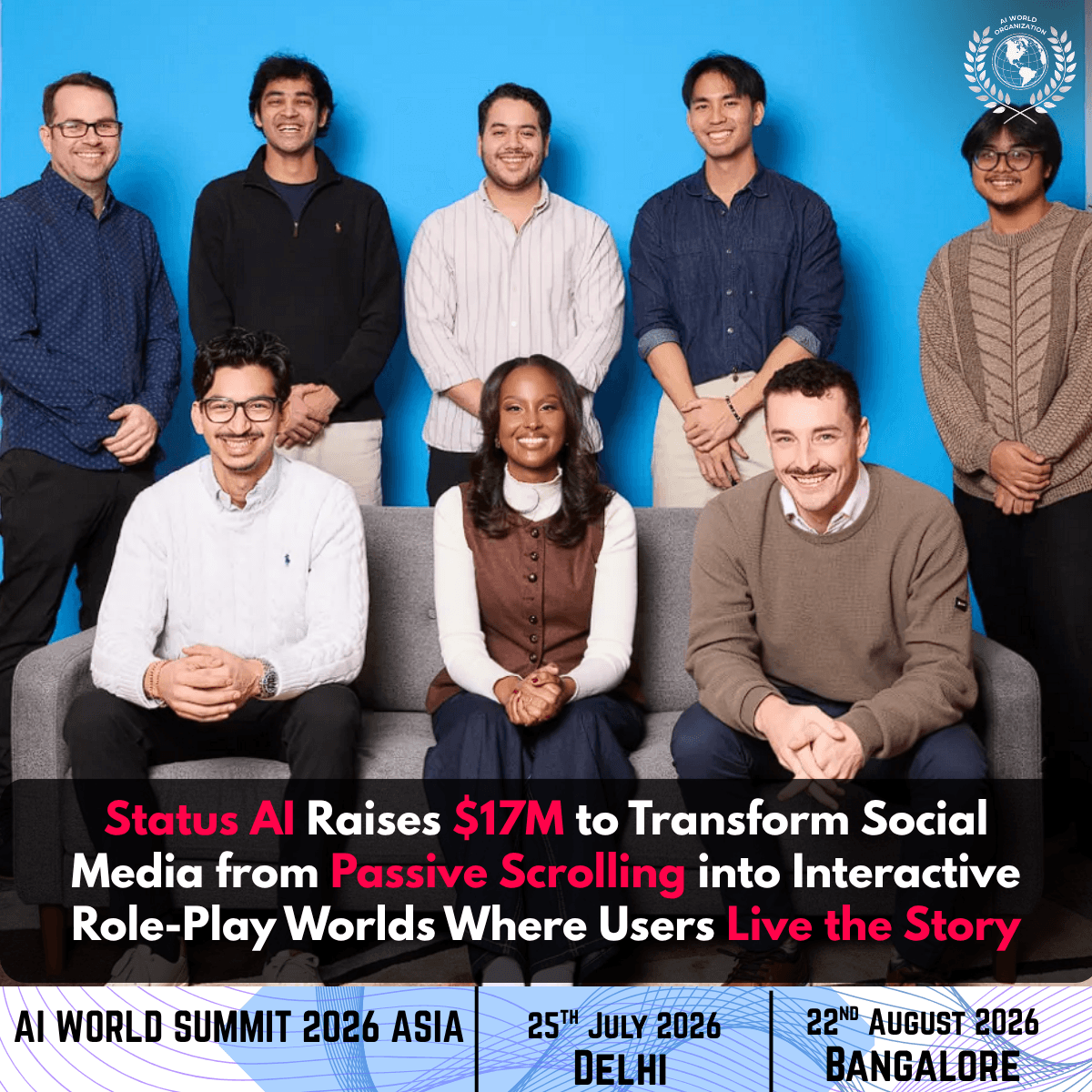
Status AI secures $17M funding to transform social media into gamified, AI-powered interactive entertainment where users roleplay in immersive worlds.
TL;DR
Status AI just landed $17 million in funding to shake up how we experience social media. Instead of endlessly scrolling through feeds, users can now step into interactive worlds where they roleplay as any character they imagine—from celebrities to fantasy heroes. Backed by major investors like General Catalyst and Y Combinator, the platform uses advanced technology to create immersive storytelling experiences where you don't just watch content, you live it.
Status AI Secures $17M in Funding to Revolutionize Social Media Through Interactive Entertainment
The landscape of social media is on the brink of a dramatic transformation. While traditional platforms have long relied on passive scrolling and endless feeds, a new wave of innovation is challenging the status quo. Status AI, a groundbreaking gamified social media application, has successfully raised $17 million in combined seed and Series A funding, signaling a major shift toward interactive, immersive digital experiences that go far beyond conventional social networking.
The funding round attracted prominent investors including Abstract, General Catalyst, Union Square Ventures, Y Combinator, and LightShed Partners, all betting on a future where social media users don't just consume content—they actively participate in creating and living within digital narratives. This significant investment represents more than just financial backing for a startup; it's a vote of confidence in the belief that the next generation of internet users demands deeper, more meaningful engagement with the digital worlds they inhabit.
Status AI's approach fundamentally reimagines what social media can be. Instead of watching others' lives unfold through curated posts and stories, users step directly into immersive role-playing environments where they can embody any character from any universe imaginable. Whether becoming a celebrity with millions of followers, stepping inside a favorite book or television series, running for political office, or experiencing viral internet fame, the platform offers unprecedented creative freedom and interactive possibilities.
The Vision Behind Status AI's Interactive Platform
The origin story of Status AI reads like a digital-age entrepreneurial journey shaped by generational shifts in technology consumption. Co-founder and CEO Fai Nur describes herself as a "chronically online teenager" who spent countless hours engaging with music groups, television shows, and movies across various online communities. When ChatGPT launched in late 2022, Nur immediately recognized the transformative potential of artificial intelligence to enable experiences that had previously existed only in fans' imaginations.
The breakthrough realization was simple yet profound: AI technology could finally allow any user to simulate any character, not merely discuss or observe their favorite fictional worlds but actually inhabit them. The role-playing and immersion that devoted fans had always craved suddenly became achievable at scale, opening entirely new dimensions of user engagement and entertainment.
Nur assembled a founding team that brought complementary skills to this ambitious vision. She recruited Amit Bhatnagar, whose background included extensive experience building Minecraft games, along with Pritesh Kadiwala. Together, this trio began developing what would become Status AI—a platform where users craft personalized personas and get transported into social worlds constructed around their chosen identities.
The platform officially emerged from stealth mode last year, introducing a concept that challenges fundamental assumptions about social media's purpose and structure. Rather than optimizing for time spent passively viewing content created by others, Status AI prioritizes active participation, creative expression, and immersive storytelling. Users don't simply scroll through feeds; they actively shape narratives, build relationships with AI-driven characters, and progress through storylines that evolve based on their choices and interactions.
The mechanics of the platform reflect this participatory philosophy. When users first enter Status AI, they craft a unique persona that serves as their avatar within the system. From that starting point, they're transported into dynamically generated social worlds where every element—settings, storylines, characters, and narrative developments—emerges from player interaction rather than pre-scripted content.
Users begin by selecting one character to become their first follower, then gradually earn additional followers as their story progresses and their influence within the virtual world expands. The platform supports both multiplayer and single-player modes, accommodating users who want to connect with friends as well as those preferring solo experiences. This flexibility ensures the platform can serve diverse preferences and social styles.
Artificial Intelligence as the Foundation of Immersive Experiences
The technological infrastructure enabling Status AI's ambitious vision relies heavily on sophisticated artificial intelligence systems. Unlike earlier social platforms that used AI primarily for content recommendation and advertising optimization, Status AI employs AI as the core engine driving user experiences. Every conversation with virtual characters, every narrative twist, and every social interaction flows from AI models trained to generate contextually appropriate, engaging responses.
This represents a significant evolution from the first generation of AI-powered social applications. Platforms like Character.AI and Chai pioneered AI-driven conversations, but their experiences centered primarily around chatbot interactions—essentially sophisticated text exchanges with virtual personalities. While innovative at the time, Nur argues this chatbot-centric model already feels dated compared to what's now possible.
Status AI pushes beyond simple conversation toward comprehensive world-building. Users don't just chat with AI characters; they exist within AI-generated social ecosystems complete with followers, rivals, allies, story arcs, and evolving relationships. The AI systems powering these experiences must simultaneously manage individual character personalities, track narrative continuity, maintain social dynamics, and respond dynamically to user choices—a computational challenge requiring substantial technical sophistication.
The platform's user-generated content model amplifies this AI foundation. Because settings, stories, and characters all emerge from player interaction rather than developer-created content, the AI must handle virtually unlimited creative scenarios. One user might choose to become a space explorer building a galactic empire, while another inhabits a contemporary celebrity navigating fame's pressures, and yet another steps into a fantasy realm from their favorite novel. The AI architecture must flexibly support all these divergent scenarios while maintaining coherent, engaging experiences.
This technical approach aligns with broader industry trends toward generative AI applications. While much attention has focused on text generation, image creation, and code writing, Status AI demonstrates AI's potential to generate persistent, interactive social environments. The technology doesn't just produce isolated outputs; it maintains ongoing narratives, remembers user choices, and builds complex relationship dynamics over extended periods.
Market Positioning and the Future of Social Entertainment
The $17 million funding round reflects investor confidence that consumer social media's next chapter won't revolve around incremental improvements to existing feed-based models. Instead, backers are betting on fundamentally different experiences centered on interactive entertainment and the intellectual property franchises that can emerge from user-generated worlds.
This positioning places Status AI at the intersection of several significant technological and cultural trends. Social media platforms face increasing challenges around user engagement, particularly among younger demographics who've grown up with ubiquitous smartphones and constant connectivity. Traditional feed-based experiences that once felt novel now compete for attention against streaming video, gaming, short-form video platforms, and countless other digital entertainment options.
Simultaneously, gaming has evolved from a niche hobby into mainstream entertainment consumed by billions globally. The boundaries between gaming, social networking, and entertainment continue blurring. Platforms like Roblox and Fortnite already demonstrate how social interaction, creative expression, and entertainment can merge into unified experiences. Status AI extends this convergence into new territory by emphasizing narrative role-play and AI-driven character interaction.
The platform has already begun attracting interest from entertainment studios and content creators who see Status AI as a potential tool for audience development. Rather than traditional marketing approaches, studios could create Status AI worlds based on their intellectual properties, allowing fans to immerse themselves in those universes before theatrical releases or live events. This approach transforms passive marketing into active engagement, potentially building deeper connections between audiences and franchises.
Nur's articulation of the platform's core premise captures this generational shift succinctly: "Status is built on the premise that the next generation doesn't want to watch stories. They want to engage with the stories and even live inside them". This philosophy challenges the passive consumption model that has dominated social media since its inception, proposing instead that users increasingly seek agency, creativity, and participation in their digital experiences.
The competitive landscape includes both traditional social media platforms and emerging AI-powered alternatives. Established platforms like Instagram, TikTok, and Snapchat continue evolving their features, adding increasingly sophisticated video editing tools, augmented reality filters, and recommendation algorithms. However, these remain fundamentally broadcast models where users create content for others to consume.
Meanwhile, AI-focused competitors have pursued different approaches. Character.AI built substantial user bases through AI chatbot conversations, while other startups have explored AI companions, virtual influencers, and automated content generation. Status AI distinguishes itself by combining AI character interaction with gamified progression systems, multiplayer social dynamics, and expansive world-building capabilities.
Challenges and Opportunities in Scaling Interactive AI Platforms
Building and scaling a platform as technically ambitious as Status AI presents numerous challenges that the funding will help address. AI model development and deployment requires substantial computational resources, particularly when supporting potentially millions of concurrent users each engaged in unique narrative experiences. The infrastructure costs for running sophisticated language models at scale represent significant ongoing expenses.
Content moderation presents another complex challenge. User-generated worlds with AI-driven characters could potentially produce inappropriate, harmful, or problematic content despite safety guardrails. Ensuring age-appropriate experiences, preventing harassment, and maintaining community standards in dynamically generated environments requires thoughtful technical solutions and human oversight. The platform must balance creative freedom with responsible content policies.
User acquisition and retention in an increasingly crowded attention economy demands effective marketing and genuine product differentiation. Even with innovative technology and compelling experiences, Status AI must attract users from established platforms with massive existing user bases and powerful network effects. Building critical mass where users can reliably find friends and interesting multiplayer experiences requires strategic growth approaches.
Despite these challenges, the platform's potential upside is substantial. If Status AI successfully executes its vision, it could tap into multiple massive markets simultaneously—social networking, gaming, entertainment, and creative expression. The total addressable market spans billions of users globally who currently engage with some combination of these activities across fragmented platforms and experiences.
The funding provides resources to expand the engineering team, enhance AI capabilities, improve infrastructure reliability, and invest in user acquisition. With $17 million in capital, Status AI can pursue aggressive development timelines while experimenting with different growth strategies and business models. Potential revenue approaches could include premium subscriptions, virtual goods and customization options, partnerships with entertainment properties, or creator monetization programs.
Implications for the Broader AI and Social Media Industries
Status AI's funding success carries implications extending beyond a single startup's trajectory. The investment signals growing confidence among venture capitalists that AI applications can move beyond productivity tools and creative assistance into entirely new categories of consumer entertainment. While much AI investment has focused on enterprise applications, infrastructure, and model development, consumer-facing AI experiences remain relatively underexplored.
The platform's approach demonstrates how generative AI can enable experiences simply impossible with previous technology generations. Creating persistent, coherent, engaging virtual worlds with believable AI characters would have required prohibitive human labor before recent AI advances. Now, small teams can potentially build experiences that scale to millions of users, democratizing creation of sophisticated digital environments.
For traditional social media companies, Status AI represents both competitive threat and potential inspiration. If younger users increasingly prefer interactive, immersive experiences over passive content consumption, established platforms may need to evolve beyond incremental feature additions toward more fundamental reimagining of their core experiences. Some may pursue similar AI-driven interactive features, while others might acquire emerging competitors.
The entertainment industry faces similar strategic questions. As Status AI and similar platforms gain traction, intellectual property holders must consider how interactive AI experiences fit into broader franchise strategies. These platforms could serve as marketing channels, standalone revenue sources, or experimental laboratories for developing new storylines and characters that might eventually migrate to traditional media formats.
The funding environment for AI startups continues evolving rapidly as investors assess which application categories show the most promising product-market fit. Gaming and entertainment applications offer potentially massive addressable markets with established monetization models and user willingness to pay for premium experiences. Success stories in this category could catalyze additional investment in consumer AI applications.
Looking ahead, Status AI's development will provide valuable data about user preferences, engagement patterns, and monetization approaches for AI-powered social entertainment. The company's ability to retain users, drive meaningful engagement metrics, and eventually build sustainable business models will influence how investors and entrepreneurs think about opportunities at the intersection of AI, social networking, and gaming.