Shastra VC Launches $100M Fund for Deeptech AI Startups
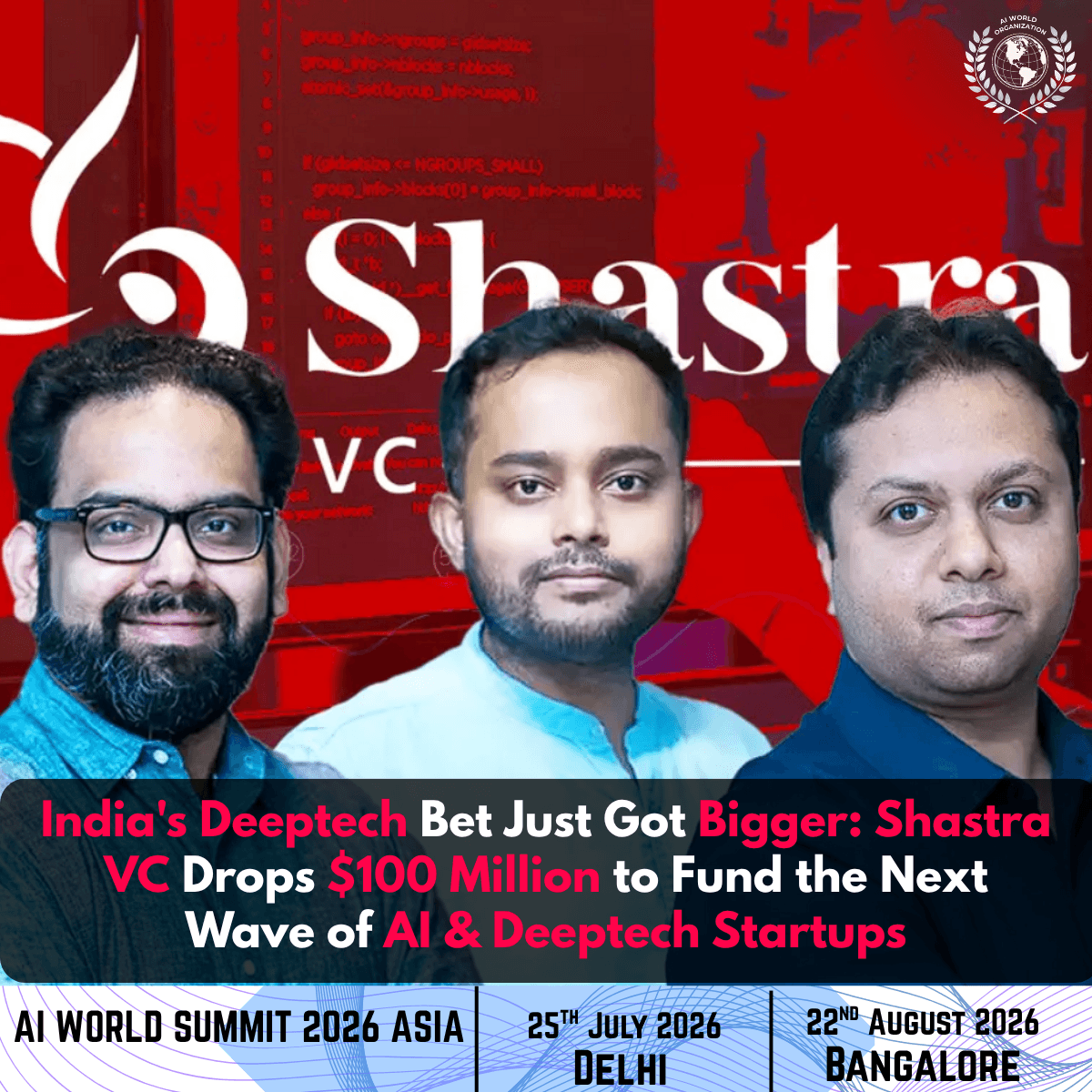
Bengaluru-based Shastra VC unveils $100 million Fund III targeting deeptech, AI, space, defense, and renewable science startups with IP-led innovations.
TL;DR
Bengaluru-based Shastra VC has launched a $100 million fund to back India's deeptech and AI startups. Fund III will invest $500K-$3M per company, focusing on space technology, defense systems, artificial intelligence, and renewable sciences. Led by Vasant Rao, Avijeet Alagathi, and Ashis Nayak, the firm has already supported 35+ startups across previous funds, deploying $55M.
Shastra VC Unveils $100 Million Fund to Propel India's Deeptech and AI Innovation
India's venture capital landscape witnessed a significant development as Bengaluru-based Shastra VC announced the launch of its third fund, marking a major commitment to the country's deeptech and artificial intelligence ecosystem. The $100 million fund represents a strategic bet on India's emerging position as a global innovation hub, particularly in sectors that demand substantial intellectual property development and long-term technological vision. This move comes at a crucial juncture when investors worldwide are increasingly recognizing the transformative potential of foundational technologies, and India is positioning itself to capture a larger share of this growing market.
The new fund announcement signals more than just capital availability—it reflects a maturing investment philosophy that values deep science and engineering-led innovation over conventional software-based business models. As India continues to produce world-class technical talent and research capabilities, venture capital firms like Shastra VC are stepping up to bridge the gap between laboratory breakthroughs and commercial success. The firm's decision to double down on sectors like space technology, defense systems, renewable sciences, and artificial intelligence demonstrates confidence in India's ability to compete globally in cutting-edge technology domains. This development is particularly significant for the AI World Organization community, as it underscores the growing recognition of AI and deeptech as critical pillars of future economic growth and technological sovereignty.
Strategic Investment Focus and Sector Priorities
Shastra VC's Fund III has been designed with a laser-sharp focus on backing startups that are building intellectual property-driven solutions across multiple frontier technology sectors. The firm has committed to investing between $500,000 and $3 million in individual companies, targeting entrepreneurs who are working at the intersection of science, engineering, and commercial viability. Unlike traditional venture funds that might spread their bets across numerous sectors, Shastra VC has deliberately concentrated its investment thesis on areas where India possesses both talent depth and market opportunity. The fund will prioritize space technology and defense applications, two sectors that have seen unprecedented policy support from the Indian government in recent years through initiatives like the opening up of the space sector to private players and increased focus on indigenous defense manufacturing.
Artificial intelligence remains a cornerstone of the fund's investment strategy, reflecting the technology's pervasive impact across industries and its potential to create outsized value through automation, optimization, and novel applications. The firm is particularly interested in AI startups that go beyond superficial applications and instead build foundational models, specialized algorithms, or domain-specific intelligence systems that solve complex problems in healthcare, manufacturing, agriculture, and infrastructure. Renewable sciences and climate technology represent another critical focus area, aligning with global imperatives around sustainability and India's ambitious renewable energy targets. By supporting startups in carbon capture, alternative materials, energy storage, and sustainable manufacturing, Shastra VC is positioning its portfolio to address some of humanity's most pressing challenges while capturing significant market opportunities. This multi-sector approach allows the fund to diversify risk while maintaining focus on technology-intensive businesses that require patient capital and deep operational support.
The Team Behind Shastra VC's Ambitious Vision
The leadership team at Shastra VC brings a unique combination of entrepreneurial experience, operational expertise, and investment acumen that sets the firm apart in India's venture capital ecosystem. Vasant Rao, one of the managing partners, co-founded Autoninja, a technology company that was successfully acquired by ICICI Lombard, giving him firsthand experience in building and scaling businesses in the Indian market. This entrepreneurial background proves invaluable when working with early-stage founders who face the daily challenges of product development, market entry, and scaling operations. Rao's journey from founder to investor provides portfolio companies with practical insights that go beyond theoretical advice, helping them navigate the complexities of building technology businesses in emerging markets.
Avijeet Alagathi, another managing partner, founded BYG, which was later acquired by Curefit, demonstrating his ability to identify market opportunities and execute on business models that attract strategic acquirers. His background also includes experience at Goldman Sachs and education from the Indian Institute of Management, blending financial sophistication with entrepreneurial instincts. Ashis Nayak, the third managing partner, co-founded Autoninja alongside Rao, bringing complementary skills and shared operational understanding to the partnership. Together, this trio has built Shastra VC into a firm that currently manages approximately $100 million in assets under management, having deployed around $55 million across its first two funds. Their track record of supporting over 35 startups demonstrates both deal flow capabilities and the ability to add value beyond capital.
The firm has also assembled an impressive advisory network comprising business leaders, domain experts, and scientific advisors who can provide specialized guidance to portfolio companies. Notable advisors include CP Gurnani and C. Jayaram, both respected figures in India's technology and business community. Beyond these high-profile names, Shastra VC has cultivated relationships with over 30 technical champions including founders who have successfully navigated the deeptech journey, researchers at the cutting edge of their fields, experienced operators who understand the challenges of scaling technology companies, and limited partners who bring sector expertise alongside capital. This ecosystem approach recognizes that deeptech startups need more than just funding—they require access to specialized knowledge, industry connections, validation from credible experts, and guidance on navigating regulatory frameworks. By building this support infrastructure, Shastra VC is creating a platform that can meaningfully accelerate the growth trajectory of its portfolio companies.
From Veda VC to Shastra VC: A Journey of Evolution and Scale
The launch of Fund III represents a significant milestone in the firm's evolution, particularly considering its rebranding from Veda VC to Shastra VC. This transformation reflects not just a change in nomenclature but a refinement of investment philosophy and a scaling up of ambitions. The decision to raise a $100 million fund—nearly doubling the total capital deployed across the previous two funds—demonstrates investor confidence in the team's capabilities and the attractiveness of the deeptech opportunity in India. The firm's track record across Funds I and II provided the foundation for this scale-up, with successful deployments totaling approximately $55 million across more than 35 companies. This portfolio includes notable names like Simplismart, which works on smart home automation and IoT solutions; Alt Carbon, focused on carbon capture and climate technology; Sisir Radar, developing advanced radar systems; and Avammune, working in the biotechnology space.
The expansion from earlier funds to Fund III also signals an evolution in the firm's investment strategy and capabilities. While continuing to support companies at the seed stage, the new fund has been structured to enable follow-on investments, allowing Shastra VC to back portfolio companies through Series A and beyond. This multi-stage investment capability addresses one of the persistent challenges in deeptech investing—the need for sustained capital support through extended development cycles. Unlike software startups that might reach product-market fit within 12-18 months, deeptech companies often require several years to complete research and development, achieve regulatory approvals, validate technology at scale, and build sustainable revenue models. By committing to support companies beyond initial investments, Shastra VC is providing founders with the confidence that they have a committed partner for the long term, reducing the distraction and risk associated with constant fundraising.
The rebranding to Shastra—a Sanskrit word that can be interpreted as "science," "scripture," or "systematic knowledge"—reflects the firm's deepened commitment to backing scientifically rigorous and knowledge-intensive businesses. This positioning differentiates Shastra VC in a crowded venture capital market where many firms chase trending sectors or momentum-driven opportunities. Instead, Shastra VC is signaling its willingness to invest in companies that may have longer gestation periods but offer the potential for category-defining innovations and sustainable competitive advantages built on proprietary technology and intellectual property. This patient capital approach is essential for deeptech success, where breakthrough innovations often emerge from years of focused research and iterative development rather than rapid experimentation and pivot cycles common in consumer technology.
The Deeptech Investment Landscape in India: Opportunities and Challenges
India's deeptech and artificial intelligence startup ecosystem has matured considerably over the past decade, evolving from primarily services-oriented businesses to product and IP-driven companies that compete globally. The country's strengths in engineering talent, research institutions, and cost-effective development capabilities create a compelling environment for building technology-intensive companies. However, deeptech entrepreneurship in India still faces several structural challenges including limited early-stage risk capital willing to support long development cycles, insufficient industry-academia collaboration to commercialize research, regulatory uncertainties in sectors like space, defense, and biotechnology, and limited exit opportunities for investors in these capital-intensive sectors. Shastra VC's Fund III launch addresses some of these challenges by providing dedicated capital for deeptech ventures and bringing operational expertise to help navigate sector-specific complexities.
The timing of this fund launch aligns with several positive developments in India's innovation ecosystem. Government initiatives like the startup India program, liberalization of the space sector through IN-SPACe, increased defense procurement from domestic manufacturers under Atmanirbhar Bharat, and substantial investments in renewable energy infrastructure have created favorable conditions for deeptech startups. Additionally, global trends including supply chain diversification away from single-country dependencies, increased focus on technological sovereignty and critical technologies, growing enterprise adoption of AI and automation, and heightened awareness of climate change driving investment in clean technologies are creating market opportunities that Indian deeptech startups are well-positioned to capture. Shastra VC's investment thesis recognizes these macro trends and seeks to back entrepreneurs who can build globally competitive companies while addressing India-specific challenges.
The broader venture capital activity in India during 2026 suggests a healthy appetite for early-stage investing despite global economic uncertainties. Data from recent months indicates consistent deal flow across multiple sectors, with investors continuing to back innovative business models and technology-driven solutions. The deeptech and AI sectors, in particular, have attracted significant attention from both domestic and international investors who recognize India's potential to become a significant player in these domains. However, the quality of capital matters as much as the quantity—deeptech founders benefit most from investors who understand the unique dynamics of science-based businesses, can provide strategic guidance beyond financial support, have networks that facilitate customer connections and partnerships, and possess the patience to support multi-year development timelines. Shastra VC's approach of combining capital with advisory support and technical expertise addresses these requirements, potentially setting a template for how deeptech investing should be practiced in emerging markets.
Implications for AI World Organization and the Broader Innovation Community
For organizations like AI World Organization that are committed to advancing artificial intelligence and emerging technologies, the launch of Shastra VC's $100 million fund represents an encouraging signal about the maturation of India's innovation financing ecosystem. The availability of dedicated capital for AI and deeptech startups creates opportunities for more entrepreneurs to pursue ambitious ideas without being constrained by funding limitations. This capital infusion can accelerate the development of Indian AI capabilities across the technology stack—from foundational models and algorithms to domain-specific applications in healthcare, agriculture, education, and governance. As more startups receive funding and successfully scale, they contribute to a virtuous cycle that attracts additional talent, generates success stories, creates exit opportunities, and establishes India as a legitimate hub for AI and deeptech innovation.
The emphasis on intellectual property-led businesses in Shastra VC's investment thesis also has important implications for how Indian startups position themselves globally. Rather than competing primarily on cost or service delivery, IP-driven companies build defensible moats through proprietary technology, patents, specialized expertise, and unique datasets. This positioning enables them to command premium valuations, compete effectively in international markets, and potentially become acquisition targets for larger technology companies or strategic buyers. For the AI World Organization community, this shift toward IP-driven innovation suggests opportunities for collaboration including supporting startups in developing patent strategies, facilitating connections between researchers and entrepreneurs, creating platforms for technology validation and demonstration, and advocating for policies that protect and encourage intellectual property development in AI and deeptech sectors.
The success of funds like Shastra VC's latest vehicle will also influence the behavior of other investors in the ecosystem. As deeptech investments demonstrate viable returns and successful exit paths, more traditional venture capital firms may allocate portions of their portfolios to science-intensive businesses. This broadening of the investor base would provide entrepreneurs with more funding options and potentially create competitive dynamics that improve terms and support for founders. Additionally, successful deeptech companies that emerge from this funding cycle may themselves become angel investors or limited partners in future funds, creating a self-sustaining ecosystem where knowledge and capital recirculate within the community. AI World Organization can play a catalytic role in this ecosystem development by convening stakeholders, sharing best practices, highlighting successful case studies, and creating forums where founders, investors, researchers, and policymakers can engage in dialogue about advancing India's position in global technology leadership.
Looking ahead, the trajectory of Shastra VC's Fund III will serve as an important indicator of India's deeptech potential. As the fund deploys capital over the coming years and portfolio companies progress through their development milestones, the broader investment community will gain valuable data about what works in the Indian context—which sectors show the most promise, what types of founder profiles succeed in deeptech entrepreneurship, how long development cycles typically run, and what exit multiples are achievable. This learning will inform the next generation of fund formation and investment strategies, potentially attracting even larger pools of capital to Indian deeptech and AI innovation. For stakeholders across the ecosystem—from researchers considering entrepreneurship to policymakers designing support programs—the outcomes generated by funds like Shastra VC's latest vehicle will provide crucial guidance for resource allocation and strategic prioritization in building India's innovation economy.