Nvidia Jensen Huang leadership risk
Jensen Huang's influence over Nvidia's strategy, chip supply and AI investments raises questions about leadership succession and the industry's dependence on one CEO.
TL;DR
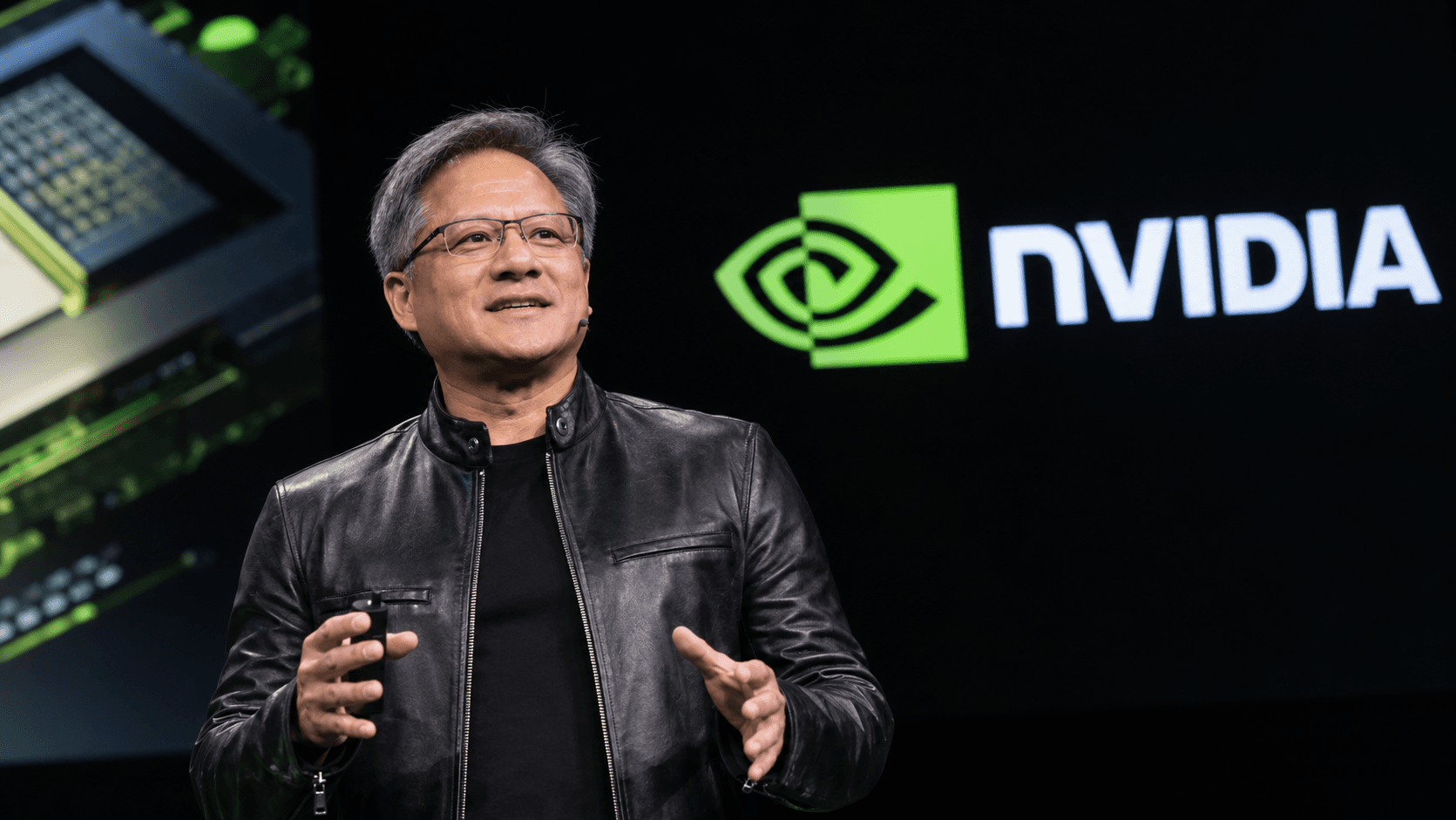
Jensen Huang has led Nvidia since co-founding the company in 1993 and has become one of the most influential figures in the global AI industry.
His influence extends beyond GPU supply to AI investments, technology partnerships and strategic decisions across the industry.
More than 60 executives reportedly report directly to Huang, reflecting Nvidia's unusually flat management structure.
Huang owns approximately 3.6% of Nvidia, but does not hold the special voting shares that give some other technology founders greater control over their companies.
Analysts have raised concerns about succession planning, with Nvidia yet to publicly identify a successor who could seamlessly take over his responsibilities.
Nvidia's AI Empire Depends on Jensen Huang. What Happens If He's No Longer at the Helm?
Nvidia's influence over the global artificial intelligence industry extends well beyond the processors powering its data centres. At the centre of this expanding ecosystem is one individual: Jensen Huang.
The 63-year-old co-founder and chief executive has become a central figure in decisions involving GPU supply, technology partnerships, investments and the company's long-term strategy. As Nvidia's influence grows across the AI industry, analysts are raising a different kind of concern: how much of the company's success depends on Huang personally?
The concern is not simply about who could replace him as CEO. It is about how a company so deeply connected to the global AI industry would operate without the person who has guided its direction for more than three decades.
From Chip Supplier to Influential Player Across the AI Industry
Nvidia is no longer just a company that sells graphics processing units (GPUs). Its financial resources and position in AI computing have allowed it to invest in cloud-computing providers, semiconductor suppliers and major AI research organisations.
This gives Huang influence across several layers of the AI ecosystem, from the hardware needed to train advanced models to the infrastructure companies building businesses around them.
The importance of that influence was illustrated in 2024 when Oracle co-founder Larry Ellison described a dinner involving Huang and Elon Musk. Ellison recalled that he and Musk had effectively been competing for Nvidia's GPU supply, highlighting how important access to the company's processors had become for businesses expanding their AI operations.
Huang's influence also extends to how the industry views AI. He has repeatedly challenged concerns about an AI investment bubble and pushed back against warnings that the technology could pose an existential threat to humanity.
His public endorsements can also attract market attention. In 2025, a dinner in Seoul with the heads of Samsung and Hyundai drew unexpected attention to two South Korean food companies whose shares surged. His description of Marvell Technology as a potential trillion-dollar company also helped drive interest in the semiconductor firm.
These examples illustrate how Huang's influence reaches beyond Nvidia's internal decisions and into investor sentiment across the technology industry.
Inside Nvidia's Unusual Leadership Structure
Huang's management style is another reason he remains so central to Nvidia.
He co-founded the company in 1993 and maintains a relatively flat organisational structure, with more than 60 executives reportedly reporting directly to him. Most of these executives work in engineering-related functions.
Huang has previously explained that he prefers this arrangement because the company's organisational structure should reflect the environment in which it operates.
The approach allows him to remain closely involved in technology development and important business decisions. However, it also raises questions about how responsibilities would be distributed if he were suddenly unable to lead the company.
Huang owns approximately 3.6% of Nvidia, making him its fifth-largest shareholder. Unlike Meta's Mark Zuckerberg and SpaceX's Elon Musk, he does not hold special voting shares that give him majority voting control.
His family members also hold positions within the organisation. His son-in-law, Nico Caprez, oversees relationships with AI cloud-computing providers and data-centre operators. His daughter, Madison, is a senior director responsible for marketing physical AI products, while his son Spencer works in Nvidia's robotics division.
This concentration of relationships, responsibilities and strategic influence makes the question of leadership continuity particularly relevant.
The Succession Question Nvidia Has Yet to Answer
Despite Nvidia's position as one of the most important companies in technology, it has not publicly identified a designated successor to Huang.
Analysts have questioned whether any existing executive could immediately take over his responsibilities without affecting the company's direction.
Dan Ives, a partner and senior managing director at Yorkville Ives & Co., has argued that there is no obvious member of Nvidia's management team who could seamlessly replace Huang as CEO.
Nvidia's publicly listed leadership team includes several experienced executives:
Colette Kress: Executive Vice President and Chief Financial Officer.
Nick Parker: Executive Vice President of Worldwide Field Operations.
Debora Shoquist: Executive Vice President of Operations.
Tim Teter: Executive Vice President, General Counsel and Secretary.
These executives oversee important parts of Nvidia's operations, but the company has not publicly designated any of them as Huang's successor.
The absence of a publicly identified replacement does not establish that Nvidia lacks a private succession plan. However, it leaves investors and industry observers with unanswered questions about how the company would manage an unexpected leadership transition.
Recent Developments Add to the Leadership Scrutiny
The succession discussion has gained additional attention following reports that Huang may have been targeted in a foreign-intelligence effort.
The reporting involved allegations concerning Huang's relationship with a Chinese businesswoman accused of passing information to Beijing. These are allegations reported by media outlets, not established findings of wrongdoing by Huang.
On November 8, Nvidia's board announced an independent investigation overseen by independent directors and outside legal counsel.
The board stated that it had no reason to believe that Nvidia's confidential information or US national security had been compromised. It also expressed confidence in Huang and his leadership team.
Huang has supported the review and committed to cooperating with the investigation.
While the investigation is a separate matter from succession planning, it has brought further attention to the risks associated with concentrating so much influence around one executive.
Why Jensen Huang's Successor Matters Beyond Nvidia
Nvidia's importance to the AI industry makes its leadership continuity a concern that extends beyond the company itself.
Its GPUs support major AI developers, cloud providers, research laboratories and enterprises building advanced computing infrastructure.
Any major disruption to Nvidia's leadership could raise questions about product roadmaps, chip allocation, investment decisions and relationships across the AI ecosystem.
The larger issue is what corporate governance experts describe as key-person risk, where too much strategic knowledge or decision-making depends on one individual.
For a company operating at Nvidia's scale, succession planning is not simply about replacing a CEO. It is about ensuring that the organisation can continue making critical decisions and executing its strategy regardless of who leads it.
The Bottom Line
Jensen Huang has played a defining role in transforming Nvidia from a graphics-chip manufacturer into a central force behind the global AI industry.
His close involvement in technology, investment decisions and relationships across the ecosystem has become an important part of the company's competitive advantage.
But that same concentration of influence raises a question Nvidia will eventually need to address: can its leadership structure remain equally effective without him?
Huang is not publicly preparing to step down, and Nvidia's board continues to express confidence in his leadership. Yet the absence of a publicly identified successor leaves an important governance question unresolved.
As AI becomes increasingly dependent on Nvidia's infrastructure, the company's long-term resilience may depend not only on its next generation of chips, but also on how successfully it prepares its next generation of leaders.