Carefam Bags $14.5M to Power AI Healthcare Hiring
Carefam raises $14.5M in AI funding to deploy intelligent hiring agents, transforming how hospitals recruit, engage, and retain healthcare staff at scale.
TL;DR
Carefam has raised $14.5 million to tackle one of healthcare's most draining problems: the never-ending hiring grind. Its AI agents handle candidate outreach, scheduling, credential screening, and onboarding automatically, freeing up HR teams to focus on what actually needs a human. With 900% growth in a single year and hundreds of healthcare providers already onboard, the platform is now expanding across the US market at full speed.
Carefam Raises $14.5 Million to Deploy AI Agents That Are Reshaping Healthcare Workforce Management
The healthcare industry has long been wrestling with one of its most persistent and operationally devastating problems — keeping enough qualified staff in place to deliver consistent, high-quality care. Hospitals, clinics, and care facilities pour enormous resources into recruitment every single year, and yet the administrative overhead embedded in the hiring process continues to create delays, lost candidates, and extended vacancies that ripple outward into patient outcomes. In a sector where a single unfilled nursing shift can directly compromise care quality, this is not merely an HR inconvenience — it is a structural crisis that has been escalating for over a decade.
Against this backdrop, Carefam, a healthcare workforce automation platform, has stepped out of stealth with a $14.5 million funding round that has caught the attention of both the health technology and venture capital communities. This latest AI funding news marks a significant milestone — not only for the company itself, but for the wider movement of intelligent automation making its way into one of the world's most complex and high-stakes industries. At The AI World Organisation, which has been actively tracking how AI-powered platforms are beginning to reshape critical sectors globally, Carefam's emergence represents exactly the kind of precision-focused, operationally grounded AI application that is beginning to define the next phase of the industry's maturity.
The Deep Roots of a Growing Workforce Crisis
To fully appreciate what Carefam is building, it is worth stepping back and understanding just how serious the healthcare workforce problem has become. Across acute care hospitals, long-term care facilities, skilled nursing homes, and home care environments, workforce management teams are fighting a near-daily battle against a combination of rising demand, accelerating turnover, and an administrative backlog that grows heavier with every passing quarter.
The statistics paint an unambiguous picture. More than half of healthcare workers globally are expected to change jobs before the close of 2026, a rate of attrition that places hiring teams in a state of essentially permanent recruitment. Each departure triggers a cascading series of tasks — job postings need to go live, outreach needs to happen, credentials need to be screened, interviews need to be scheduled, offers need to be negotiated, and onboarding needs to be coordinated. None of these steps is independently difficult, but together they generate a volume of administrative work that most HR teams are simply not staffed to handle efficiently.
This challenge is made substantially more difficult by the operational reality of healthcare environments themselves. Unlike most corporate settings, healthcare facilities do not close at the end of the business day. They operate continuously — twenty-four hours a day, seven days a week, three hundred and sixty-five days a year. Staffing needs do not pause for weekends or public holidays, and the consequences of a gap are measured not in missed project deadlines but in the quality and safety of care provided to vulnerable patients. HR teams in these settings are not simply managing talent pipelines — they are managing the continuity of life-critical services under constant pressure.
What has made the situation particularly difficult to solve is that many of the tools these teams rely on have not evolved at anything close to the pace required. Email chains, spreadsheets, manual scheduling platforms, and disconnected communication tools remain common even in large healthcare organisations. The absence of meaningful automation means that experienced HR professionals — people who are trained to make strategic workforce decisions — spend the majority of their working days on coordination and administrative tasks rather than on the high-judgement work they are actually best equipped to do. And in a market where qualified candidates are actively entertaining multiple offers simultaneously, a delay of even a day or two in responding can mean the difference between filling a critical role and losing a candidate to a competitor who moved faster.
Carefam was built specifically to close this gap. Not with a broad, general-purpose productivity platform, but with a deeply specialised system designed from the ground up to address the specific operational demands of healthcare HR at scale.
A $14.5 Million Vote of Confidence in AI-Driven Healthcare Hiring
The AI funding news surrounding Carefam's latest round has generated significant buzz across the health tech investor community. The $14.5 million raise was led by Pitango HealthTech, one of the most established and respected investors in the health technology space, with an earlier round having been backed by Emerge. The company chose not to disclose its current valuation, but the composition and size of the round signal strong conviction from investors who understand the sector deeply.
Pitango HealthTech's decision to lead this raise is particularly noteworthy. The firm has a well-established track record of backing companies that identify structural inefficiencies in healthcare and build high-precision solutions around them — rather than chasing broad market trends or incremental improvements to existing tools. The managing partner at Pitango HealthTech was direct about the reasoning behind the investment, describing Carefam as having built "the first fully operational engine for healthcare staffing" and citing the company's growth over the past year as proof of genuine product-market fit in a sector that has been crying out for efficiency solutions.
For The AI World Organisation, which covers AI funding news across sectors and regions, this round fits into a broader and increasingly significant pattern. The most impactful AI funding activity in recent months has consistently pointed toward companies using intelligent automation not to generate flashy demonstrations of technological capability, but to dismantle long-standing operational bottlenecks in industries that affect millions of people's daily lives. Carefam is a clear expression of that trend — a company that has taken a specific, painful, well-understood problem and applied AI with enough precision and depth to produce results that are measurable and scalable.
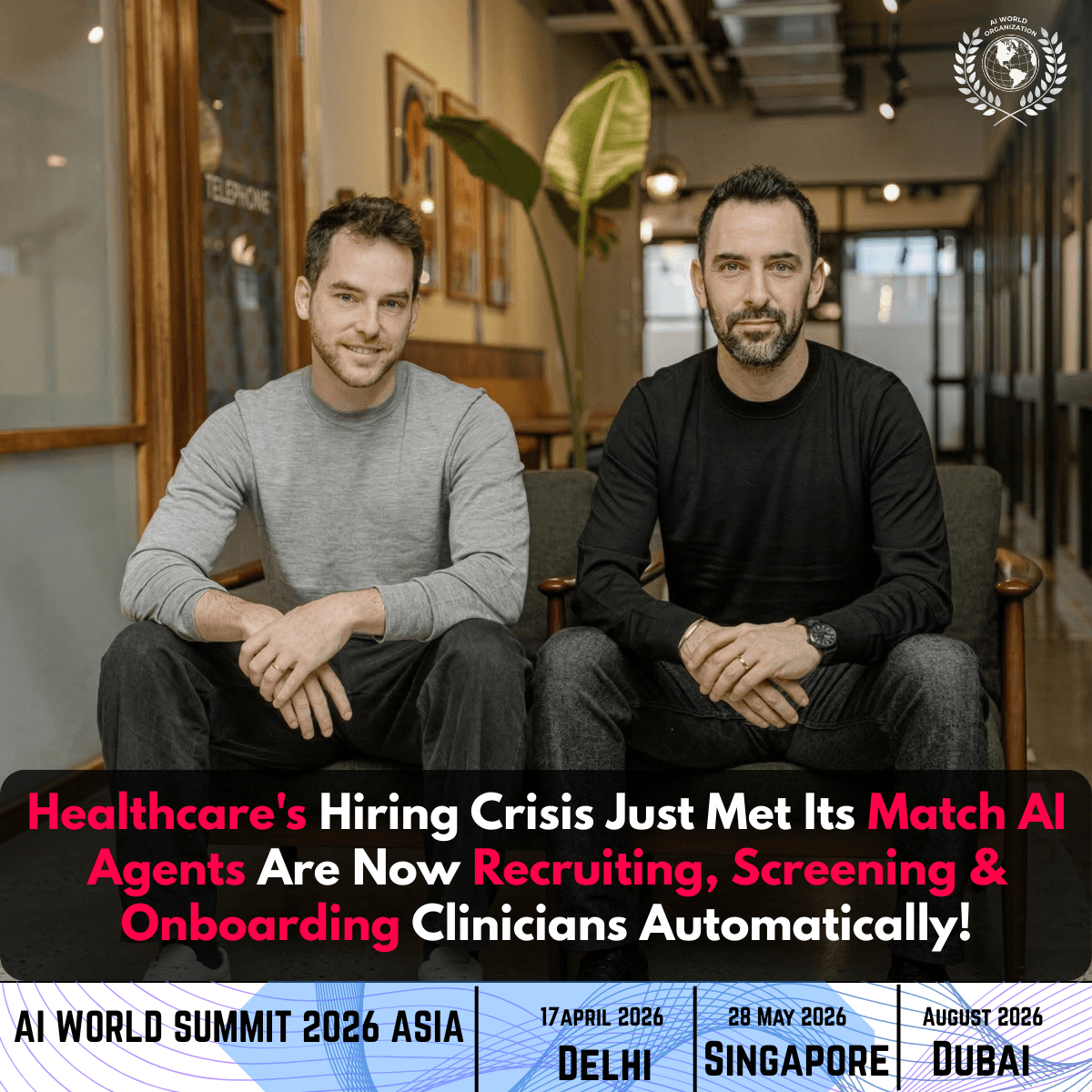
The company was co-founded by Matan Hoffmann, who serves as CEO, and Eyal Shulman, who serves as CTO. Both founders bring richly layered backgrounds that span defence intelligence, global management consulting, and technology leadership at scale. Their service in the Israel Defense Forces — Hoffmann in Special Forces and Shulman in the elite intelligence and cybersecurity division known as Unit 8200 — provided them with experience navigating high-pressure, operationally complex, and time-critical environments where the cost of inefficiency is unacceptably high. They later held senior roles at organisations including Amazon, BCG, and Citi, as well as leadership positions across a range of startups. This combination of elite operational experience and deep technology expertise is clearly reflected in the architecture and ambition of the platform they have built.
How Carefam's Specialised AI Agents Actually Work
What sets Carefam apart from the wider universe of HR technology platforms is not just what it does, but the singular focus with which it does it. The platform does not attempt to serve a broad range of industries or generalise its capabilities to fit as wide a buyer base as possible. It was designed exclusively for healthcare, and every feature, workflow, and integration it offers reflects the specific demands of that environment.
The core of the platform is a suite of specialised AI agents that embed directly into healthcare HR workflows and manage key operational tasks on behalf of hiring teams. These are not simple chatbots or templated messaging tools — they are operational systems capable of executing complex, multi-step workflows without requiring constant human oversight. In practice, this means the agents handle outbound candidate communication, respond to inbound questions, manage the full scheduling and coordination process across the recruitment journey, screen and organise credential documentation, and maintain a consistent, ongoing communication thread with every candidate from first contact through to offer acceptance.
One of the most practically significant capabilities these agents provide is speed. In a competitive talent market, the velocity of communication is often the deciding factor in whether an organisation wins or loses a candidate. Healthcare workers exploring their options will naturally engage most deeply with the employer who responds clearly, consistently, and quickly. Carefam's platform guarantees that no candidate is left waiting — every interaction is handled with precision and immediacy, regardless of what other pressures the HR team is managing at any given moment.
Equally important is the platform's approach to the boundary between automation and human judgment. Carefam's design acknowledges explicitly that not every hiring moment is one that should or can be handled by an AI agent. There are points in any recruitment process — particularly around sensitive conversations, compensation negotiations, or situations where a candidate's personal circumstances require genuine empathy — where human involvement is not only preferable but necessary. The platform identifies these moments and escalates them cleanly to the appropriate HR professionals, creating a hybrid operational model that allows organisations to capture the full efficiency benefits of automation while preserving the human connection that meaningful employment relationships require.
The platform's value proposition does not end at the point of offer. Carefam extends its functionality through the onboarding journey as well, maintaining consistent and structured communication with new hires as they transition into their roles. This is a dimension that most recruitment tools neglect entirely, yet it is one of the most critical periods for employee retention. A new hire who feels informed, supported, and engaged during onboarding is substantially more likely to stay — reducing the very turnover that triggered the hiring process in the first place. By closing this loop, Carefam positions itself not just as a recruitment tool but as a comprehensive clinician engagement platform.
The breadth of the platform's current deployment is itself a strong validation of its approach. Carefam is already live across hundreds of healthcare organisations, serving providers in acute care, long-term care, and home care settings — a spread that demonstrates the platform's ability to adapt to very different operational models and care environments without losing its core effectiveness.
900% Growth and What Comes Next
Perhaps the most striking element of the Carefam story is not the funding round itself, but the growth trajectory that preceded it. Over the course of just one year, the company recorded 900% growth — a figure that is all the more remarkable given that it was achieved while operating entirely in stealth, without the benefit of public visibility, marketing campaigns, or broad press coverage. This kind of organic growth, driven purely by demonstrated results and word-of-mouth endorsement among healthcare providers, is one of the most reliable indicators of genuine product-market fit that exists in the startup ecosystem.
The company is now preparing to move aggressively into the national US market, targeting all major healthcare geographies across the country. The United States healthcare system is one of the most expansive and resource-intensive workforce environments on the planet, employing tens of millions of people across a vast and fragmented landscape of providers. The scale of potential deployment in this market alone is significant, and Carefam's combination of operational credibility and investor backing puts it in a strong position to pursue that opportunity at pace.
Beyond geographic expansion, Carefam has indicated its intention to extend the platform into additional HR workflows beyond hiring and retention. While specifics have not yet been made public, the underlying architecture of specialised AI agents is well-suited to a wide range of workforce management functions, including shift scheduling, compliance tracking, continuing education coordination, and broader employee lifecycle communication. Each of these represents a further opportunity to reduce administrative burden and improve operational outcomes for healthcare providers.
The company's external recognition has matched its internal momentum. Carefam was recently named among Business Insider's Most Promising Startups in Healthcare, an acknowledgment that reflects the broader industry's growing awareness of what the company is building. Combined with the backing of a respected sector-specific investor and a year of exceptional growth, this external validation adds further weight to what is already a compelling story.
It is also worth drawing attention to the team behind the product. More than half of Carefam's employees are women, and the company employs a number of former nurses who are stepping into their first technology roles. This is more than a diversity statistic — it represents a deliberate and strategically intelligent choice to build a product team that carries genuine, lived understanding of the environment the platform is designed to serve. Healthcare is a profession where the majority of practitioners are women, and bringing those perspectives directly into the product development process is a meaningful advantage when it comes to designing tools that healthcare HR professionals will actually want to use.
What Carefam's Rise Signals for AI in Healthcare
The broader significance of this AI funding news extends well beyond a single company's success. Carefam's trajectory tells us something important about where the most meaningful AI investment in healthcare is now heading. The dominant narrative around artificial intelligence in medicine has long centred on clinical applications — diagnostic imaging, drug discovery, predictive analytics for patient deterioration, and genomics. These are consequential areas, and they will continue to attract their share of funding and attention. But the operational infrastructure of healthcare — the systems and workflows that determine whether the right people are present, prepared, and supported at the point of care — has been underserved by technology for too long.
What Carefam demonstrates is that AI agents, when built with genuine domain specificity and operational depth, can transform these layers in ways that are both immediately practical and durably impactful. The goal is not to replace healthcare workers or automate clinical decision-making — it is to give the people who manage healthcare workforces the tools they need to do their jobs at the speed and scale the industry demands. It is a vision of AI as infrastructure — invisible when it works, but essential to everything that depends on it.
At The AI World Organisation, we are closely tracking the global AI funding news landscape across healthcare, enterprise automation, and emerging technology sectors. The Carefam story represents a clear signal that investors with deep sector expertise are increasingly betting on the operational layer of AI — the unglamorous but indispensable work of keeping complex systems running smoothly. And in a sector where the consequences of operational failure are measured in human wellbeing, that bet is one that carries weight far beyond the balance sheets of a single startup.
The broader message from this round of AI funding is that precision matters more than breadth, and that the companies building the deepest solutions to the most specific problems are the ones attracting the most credible capital. Carefam's $14.5 million round is not just a startup success story — it is a data point in a larger and increasingly important pattern that signals how the next chapter of AI in healthcare will be written.